Shipped generation
Available nowRay-Ban Meta Gen 2
The best overall smart glasses, and the safe pick. Mature hardware, the widest feature set in the category, and frames people actually want to wear. Crucially, it works the same on iPhone and Android, which nothing else manages this well. If you want one pair and don't want to overthink it, these are the ones.
Buy on Amazon →Compare
Ray-Ban Meta Gen 2
$379
Latest


Also available
Available nowMeta Ray-Ban Display
Camera, AI assistant, and an in-eye HUD in one pair. Controlled by the Neural Band wristband. Requires in-store fitting, limited availability.
Buy on Amazon →Specs
Meta Ray-Ban Display
From $799
Latest
Hardware
4Design & Fit
2AI & Software
2Latest
Timeline
Ray-Ban Meta (Gen 1) launches at $299
Meta and Ray-Ban launched the first Ray-Ban Meta smart glasses at Connect 2023: a 12MP camera, open-ear speakers, and a built-in voice assistant starting at $299, on sale from October 17. It set up a numbered generational line Meta would return to every two years.
Source: Meta
Live AI rolls out via firmware v11
Meta shipped Live AI, first announced at Connect 2024, letting wearers point their glasses at anything and ask real-time questions. Battery life in the mode was roughly 30 minutes, a limitation that became a central argument for Gen 3 needing a bigger battery.
Source: Meta
Zuckerberg references a ‘third generation’ product on the Q4 2024 earnings call
Mark Zuckerberg told investors, “Many breakout products in the history of consumer electronics have sold 5 million to 10 million units and they're third generation,” the first public hint that a Gen 3 device was already part of Meta's plan, five months before any hardware detail leaked.
Source: Meta Q4 2024 Earnings Call
Analysts read the earnings comment as a signal for a 2025 third-gen launch
Wareable and DigiTimes both cited Zuckerberg's ‘third generation’ comment as the basis for predicting a 2025 launch. Neither had hardware detail yet; the reporting confirmed Gen 3 was a real, expected product rather than idle speculation.
Source: Wareable / DigiTimes
Qualcomm announces the Snapdragon AR1+ chip at AWE 2025
Qualcomm unveiled the AR1+ Gen 1 at AWE 2025: 26% smaller than the original AR1, enabling thinner temples, and demoed running Meta's Llama 3.2 1B model fully on-device. Neither Qualcomm nor Meta named Ray-Ban Meta Gen 3 at the announcement; the pairing was press and analyst inference that followed.
Source: Qualcomm / 9to5Google
Aperol and Bellini renders leak
Renders sourced to ‘XR Research Institute’ showed two Gen 3 models under the codenames Aperol (sunglasses) and Bellini (prescription), both thicker than Gen 2 to fit a larger battery. Two visible lens openings were widely read by press as a dual-camera setup, though the leak itself didn't state that explicitly.
Source: 9to5Google / UploadVR
Ray-Ban Meta (Gen 2) and Ray-Ban Display launch
At Connect 2025, Meta shipped Gen 2 at $379 same-day, with up to 8-hour battery, 3K video, an upgraded 12MP camera, and Wi-Fi. The separate Ray-Ban Display, with a monocular heads-up display, launched at $799, in stores from September 30.
Source: Meta
Meta hires Apple's former design chief; reportedly cuts VR budget up to 30%
Meta hired Apple's former design chief Alan Dye to lead a new Reality Labs creative studio reporting to CTO Andrew Bosworth. The next day, Bloomberg reported Meta was cutting Horizon Worlds and VR budgets by as much as 30%, with Meta confirming it was shifting investment ‘from Metaverse toward AI glasses and Wearables.’
Source: TechCrunch / Bloomberg
Meta expands glasses manufacturing capacity, cuts Reality Labs jobs
Bloomberg reported Meta and EssilorLuxottica were in talks to double manufacturing capacity to 20 million units a year, with a possible path to 30 million, a direct response to demand outpacing supply. Eleven days later, Meta laid off roughly 1,500 people, about 10% of Reality Labs, hitting VR game studios specifically while the AI-glasses side of the division was spared — the same resource story playing out on both sides: away from VR, toward the glasses line Gen 3 belongs to.
Source: Bloomberg / CNBC
Solos Technology sues Meta over the glasses' sensor stack
Solos Technology filed a patent infringement suit against Meta, Oakley, Luxottica, and EssilorLuxottica, alleging the multimodal sensing, beamforming, and sensor-fusion stack underpinning Ray-Ban Meta, including future generations, infringes its patents. Meta has not disclosed how the case might affect Gen 3's feature set or timeline.
Source: Bloomberg
EssilorLuxottica: over 7 million Meta AI glasses sold in 2025
EssilorLuxottica's FY2025 earnings call disclosed over 7 million Meta AI glasses sold in the 2025 calendar year alone, more than tripling the prior year, corroborating the demand surge behind Meta's manufacturing-capacity talks a month earlier.
Source: EssilorLuxottica / CNBC
Internal Meta memo reveals ‘Name Tag’ facial recognition plans
The New York Times reported on a May 2025 internal Reality Labs memo outlining ‘Name Tag,’ an opt-in facial-recognition feature that would let Ray-Ban Meta wearers silently identify strangers and pull up their public social profiles.
Source: New York Times / MacRumors
Swedish investigation finds Kenya contractors reviewing intimate Meta glasses footage
Göteborgs-Posten and Svenska Dagbladet's joint investigation found Sama, a Kenya-based Meta subcontractor, employed workers who reviewed video clips captured through Ray-Ban Meta glasses as part of an AI training pipeline, including footage described as bathroom visits, nudity, and other private moments captured without subjects' knowledge or consent. Workers said automatic anonymization sometimes failed to blur faces. National Law Review's later legal analysis cited the investigation alongside a federal class action, Bartone v. Meta Platforms, filed the following month.
Source: Göteborgs-Posten / National Law Review
UK ICO opens inquiry into Meta glasses footage review
The UK's Information Commissioner's Office wrote to Meta seeking information on its data-protection compliance after the Swedish investigation, calling the claims that contractors could view intimate footage concerning and saying smart glasses should put users in control with appropriate transparency.
Source: BBC
US class-action sues Meta over glasses footage review
A proposed US class-action accused Meta of misleading users about the privacy of its AI glasses, alleging camera footage was sent to a Kenya-based subcontractor for manual review without users' knowledge. The suit followed the Swedish newspapers' investigation.
Source: Engadget
FCC filings for ‘Blazer’ and ‘Scriber’ misread as Gen 3
FCC filings for two new models, Blazer (RW7001) and Scriber (RW7002), spread through tech media with some outlets speculating they were Gen 3 hardware. They weren't: Meta announced them March 31 as Blayzer Optics and Scriber Optics, $499 Gen 2 prescription frames that reached stores April 14.
Source: Winbuzzer / Meta
ACLU and 75 groups demand Meta cancel Name Tag
A coalition of 75 organizations led by the ACLU sent an open letter demanding Meta cancel Name Tag outright, calling facial-recognition eyewear ‘a red line society must not cross.’ EPIC separately petitioned the FTC and state attorneys general to block any rollout.
Source: ACLU
Zuckerberg's Instagram tease confirms Connect 2026 for September 23-24
Zuckerberg posted an Instagram image of a new pair of glasses on a table, timed to double as Meta's confirmation that Connect 2026 would run September 23-24 in Menlo Park, the venue widely expected to host Gen 3's reveal.
Source: Road to VR
Meta reportedly planning up to four new glasses in 2026, beyond Gen 3
The Information reported Meta was planning as many as four additional glasses models in 2026, codenamed Modelo, Luna, an RBM2 Refresh, and Mojito VIP, plus an AI pendant, targeting 10 million wearables sold in the second half of the year. None of the four is Gen 3, which The Information described as a separate, untitled product tied to the Connect keynote — but the scale of the surrounding lineup underscored how central glasses had become to Meta's roadmap.
Source: The Information / 9to5Google
WIRED and EFF find dormant Name Tag code; Meta pulls it within a day
WIRED and EFF's Threat Lab discovered dormant Name Tag code already deployed inside the Meta AI app on Gen 2 glasses, storing biometric faceprints as 2,048-number arrays, and activated it in debug mode to prove it worked. Meta removed the code within 24 hours; spokesperson Ryan Daniels said no final decision had been made on the feature, while Andy Stone separately called the story ‘advocacy-driven clickbait’ on X.
Source: EFF Threat Lab / WIRED
Modding community bypasses the recording indicator LED; Pennsylvania moves to criminalize it
BGR reported a wave of paid mod services physically disabling Ray-Ban Meta's recording indicator LED, citing WSJ's Joanna Stern, who found ads for the service in 30 states. Pennsylvania introduced House Bill 2603 on June 4, 2026, referred to committee the next day, which would criminalize manufacturing, selling, or recording with smart glasses lacking a functional indicator light. The bill remained in committee as of this writing.
Source: BGR / PA General Assembly
Conversation Focus rate-limited to 3 hours a month for free users
Meta quietly capped Conversation Focus, which isolates a speaker's voice in loud environments, at 3 hours a month for free users; Meta One Premium subscribers ($20/month) get 15 hours. The change surfaced via Meta's help-center pages rather than an announcement.
Source: Meta / Engadget
New York State bans smart glasses from all 1,240 courthouses statewide
Corroborated across 4 independent outlets; memo obtained directly by Bloomberg Law and Gizmodo. Applies to smart glasses generically, not Meta-specific - also listed on meta-glasses.
Meta adds auto-disable-camera response to the LED-tampering controversy
Meta said in a blog post that its glasses will now disable the camera if the recording indicator LED is detected as physically tampered with or destroyed, extending an existing safeguard that previously only blocked the camera while the light was covered. The change starts with Meta's second-generation glasses onward. Meta also said it is removing marketplace listings for LED-tampering mod services and pursuing legal action against sellers.
Source: Meta / Yahoo Tech
Meta reportedly testing an always-on ‘super sensing’ AI mode with no recording light
The Financial Times reported Meta is lab-testing an always-on ambient-AI mode, internally called ‘super sensing,’ on Aperol and Bellini prototypes with no recording indicator light. The feature is explicitly framed as prototype-stage and targeted for late 2026 or early 2027, separate from whatever ships at the September Connect keynote.
Source: Financial Times / TechCrunch
Meta expected to unveil Ray-Ban Meta Gen 3 at Connect
No official confirmation of the product itself has been made. Press continues to use ‘Gen 3’ with Aperol and Bellini as working codenames; no retail name, price, or final camera spec has been confirmed. Rumored pricing sits in the $400-500 range with a camera pitched as an ‘iPhone 13-equivalent’ jump from Gen 2, both unconfirmed.
Ray-Ban Meta Gen 3 expected to ship
Meta's last two generations shipped same-day as their Connect announcement, Gen 2 with a zero-day gap in September 2025. A straightforward Gen 3 hardware refresh is expected to follow the same pattern rather than a staggered rollout.
Media
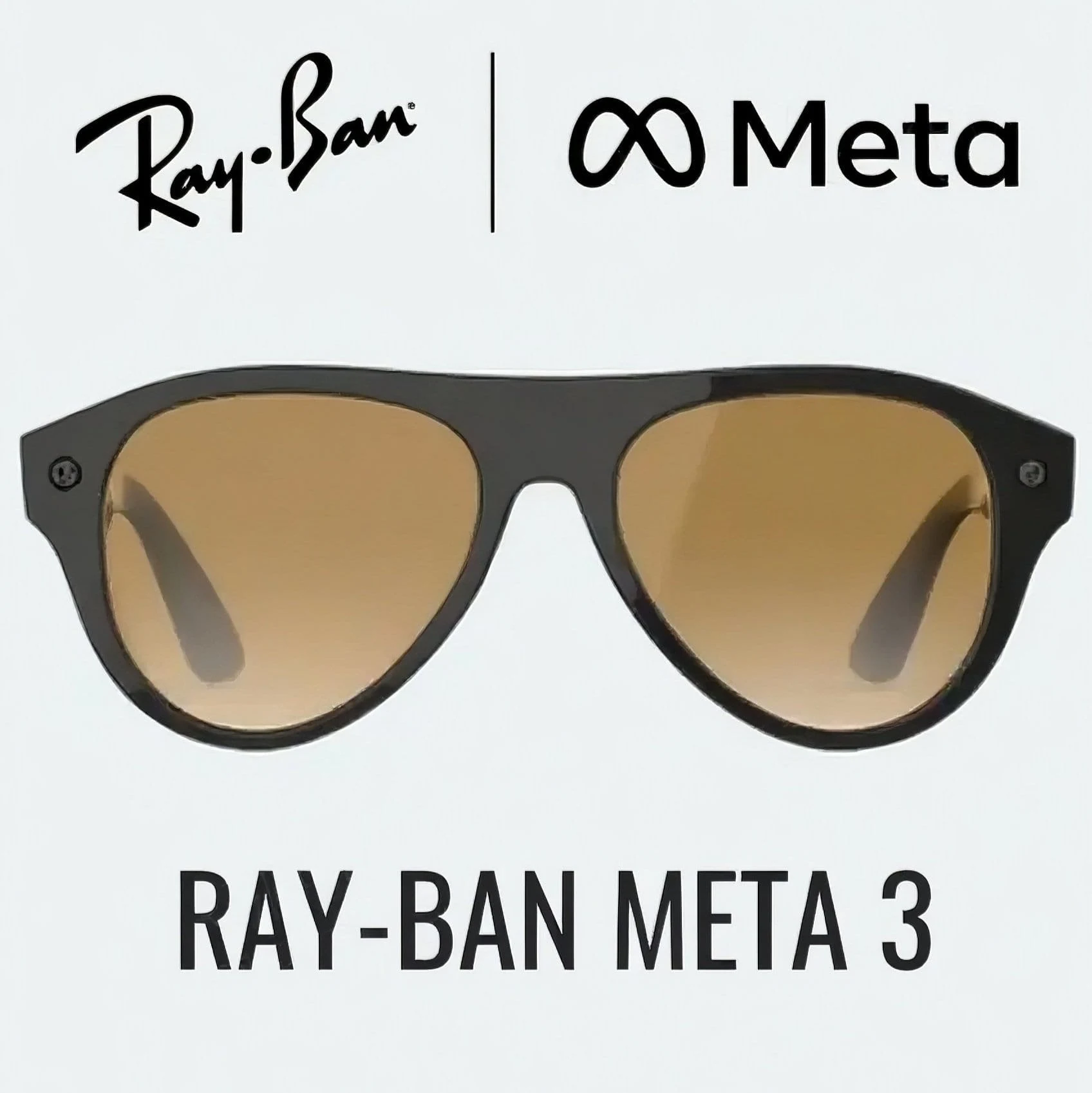
Reported "Aperol", the Gen 3 sunglasses design. Leaked render from XR Research Institute (…
via 9to5Google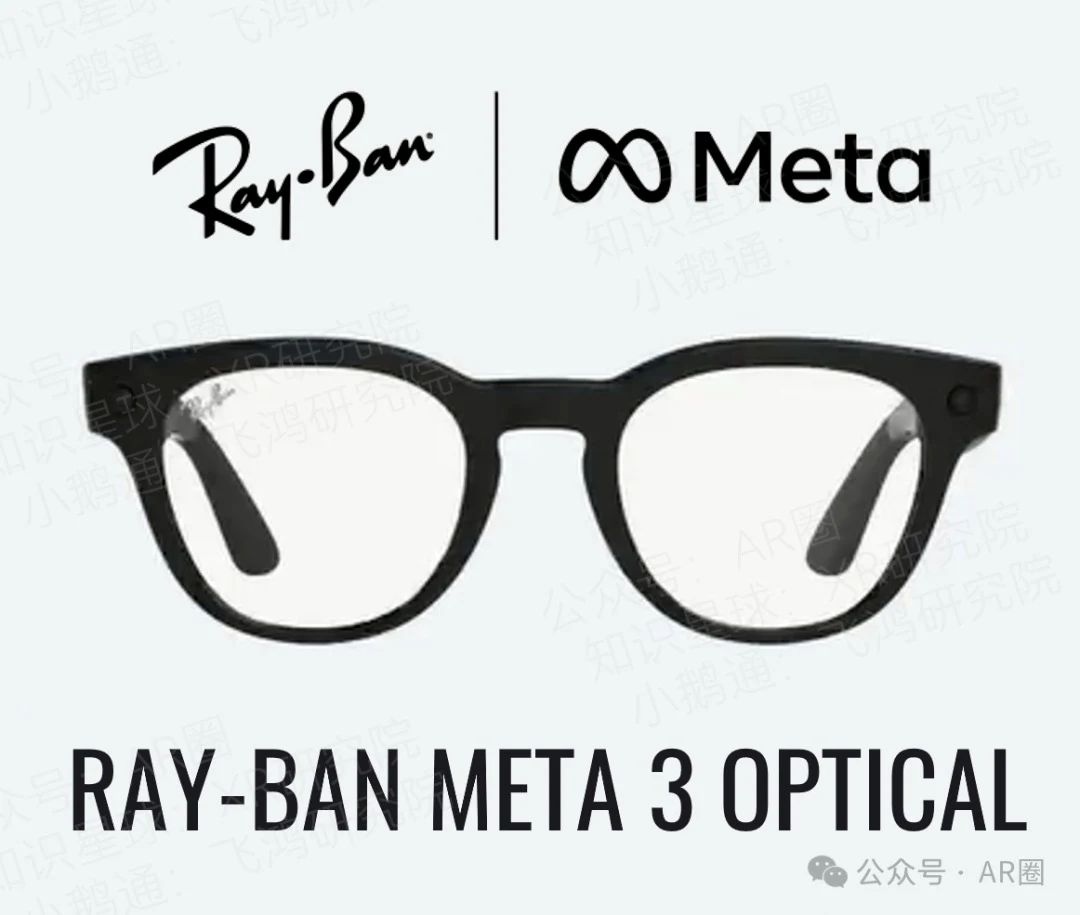
Reported "Bellini", the Gen 3 optical/prescription design. Leaked render from XR Research …
via 9to5Google