



iDevice Glossary
Plain-English definitions for the technologies, health metrics, standards and reporting terms that appear across iDevice.
Acetate
GlassesPremium thermoplastic used in high-end eyewear such as Oliver Peoples and Persol. More refined and durable than standard plastic. Reporting says Apple is using acetate for the Apple Glasses frames, which is a more eyewear-led material choice than Meta Ray-Ban's.
Active Noise Cancellation (ANC)
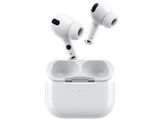
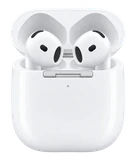
EarbudsAudio processing that reduces environmental noise. Apple currently offers ANC as the higher tier of the open-ear AirPods 4 line, and AirPods 5 is reported to keep a separate ANC model.
Actua 360
WatchesGoogle's branded domed AMOLED display, introduced on Pixel Watch 4. The dome curves the glass over the edges. Peaks at 3000 nits, offers 10% more screen area and 16% smaller bezels than Pixel Watch 3, and carried over to Pixel Watch 5 unchanged.
Adaptive Audio
EarbudsApple’s listening mode that dynamically blends Transparency mode and Active Noise Cancellation based on the user’s surroundings.
Adaptive Transparency
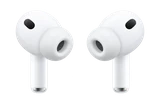
EarbudsAirPods Pro mode that passes through ambient sound while using computational audio to reduce harsh sudden noises like power tools or traffic. Unlike standard Transparency mode, Adaptive Transparency processes 48,000 audio adjustments per second via the H2 chip.
AFib
Health & FitnessAtrial fibrillation, an irregular heart rhythm that raises the risk of stroke. Many watches can flag possible AFib, but only a doctor can diagnose it.
All-Systems
WearablesA GPS mode that listens to every satellite network the watch supports at once, typically GPS, GLONASS, Galileo, BeiDou and QZSS, instead of GPS alone. More satellites overhead means a faster fix and steadier tracking under tree cover or between tall buildings, and it costs battery life to keep listening to all of them. It sits one step below multi-band, which adds a second frequency rather than more satellites.
Always-on display
Displays & OpticsA screen mode that keeps the time and key information visible at low brightness while the device is idle, instead of turning the screen off.
Ambient AI
AI & ComputingAn AI assistant designed to remain available throughout the day through devices a person wears rather than only when an app is opened. It can use context such as speech, location, camera input or sensor data to understand what is happening around the user.
AMOLED
WearablesA display where every pixel makes its own light, so a black pixel is switched off rather than lit from behind. That gives deep blacks, high contrast and colour that holds up outdoors. It also means power draw follows how much of the screen is bright, which is why a mostly dark watch face costs so little to leave on. The tradeoff against the transflective LCDs older running watches used is battery: an LCD gets brighter in sunlight for free, and an AMOLED has to spend power to match it.
Android XR
GlassesGoogle's platform for extended reality running on Android. Samsung Galaxy Glasses run on Android XR, giving them native integration with Gemini, Google Maps, Google Translate, and the broader Android ecosystem.
Aperol
GlassesCodenameGen 3 sunglasses model design codename (leaked renders).
APK
AI & ComputingAn Android app file. Reporters often dig through the code in new app versions to find features a company has not announced yet.
Apple Intelligence
GlassesApple's on-device AI framework. Runs locally for privacy, with encrypted cloud processing for complex tasks. On Apple Glasses, reporting says it is what handles visual queries, Siri responses and real-time translation.
AppleMesa
WatchesApple's internal codename for Touch ID integrated into the Apple Watch side button. References appeared in leaked 2026 firmware before public developer betas. MacRumors reported in May 2026 that Apple deprioritized it for Ultra 4, choosing to allocate that hardware budget to battery capacity and sensor improvements instead.
ATM
Durability & MaterialsA water-resistance rating based on pressure. 1 ATM is the pressure of about 10 meters of water in a lab test, so 5 ATM is also written WR50 and 10 ATM is WR100. Roughly, 3 ATM handles rain and splashes, 5 ATM handles swimming at the surface, and 10 ATM handles most water sports. It is not a rating for deep diving, and moving water adds pressure.
Augmented reality (AR)
Spatial ComputingDigital images placed on top of your view of the real world, through glasses or a phone camera. The real world stays in view.
AWE
Industry & EventsAugmented World Expo, the largest trade show focused on AR and VR, held every year in California.
B796
EarbudsCodenameEarlier AirPods camera project codename that surfaced in 2023 Bloomberg reporting, referenced alongside the first rumors of low-resolution cameras in AirPods stems
B798
EarbudsApple's internal hardware codename for AirPods Ultra, referenced in Bloomberg reporting. Bloomberg reports it is being developed alongside V73/V74 (20th anniversary iPhone) and the second-generation foldable iPhone as part of Apple's reported 2027 hardware wave, said to be tested on iOS 28 so far -- none of this is confirmed by Apple.
Bellini
GlassesCodenameGen 3 optical/prescription model design codename (leaked renders).
Bioimpedance
Health & FitnessA measurement made by sending a tiny, harmless electrical current through the body. Wearables use it to estimate body composition, like body fat.
Birdbath optics
Displays & OpticsA display design used in many video glasses. A small screen reflects off a curved mirror into your eye. The image is bright and sharp, but the lenses are thicker and darker than waveguides.
BIS Certification
WatchesBureau of Indian Standards, India's mandatory electronics certification. Device makers typically file two to four months before launch, which makes a filing one of the earliest independent signs a product is close. A filing for a Google wearable appeared in mid-2026, ahead of the Pixel Watch 5 announcement.
Blayzer Optics (Gen 2)
GlassesCodenameA Gen 2 prescription retail frame (rectangular, Standard/Large) at $499. Announced and open for preorder 31 March 2026; reached optical retail 14 April 2026. Spelled "Blayzer" by Meta, distinct from the FCC "Blazer" codename.
Blazer (RW7001)
GlassesCodenameFCC filing codename (Mar 2026, regular and large sizes) that turned out to be the Gen 2 "Blayzer Optics" prescription frame, not a Gen 3 device. The large-size variant was the first in the Ray-Ban Meta lineup. Same Gen 2 internals as Scriber.
Blood oxygen
Health & FitnessThe share of your red blood cells carrying oxygen, shown as a percentage. Watches and rings estimate it with light sensors, often while you sleep. It is a wellness reading, not a diagnosis.
Bluetooth Low Energy
Connectivity & StandardsA low-power version of Bluetooth that lets wearables stay connected to a phone all day without draining the battery.
Bone conduction
AudioSound sent as small vibrations through the bones of your head instead of through the air into your ear, so your ears stay open to the world around you.
CAD render
Industry & EventsAn image made from a product's 3D design file. Leaked CAD renders often show a device's shape before launch, but not always the final details.
Carl Pei
Industry & EventsCo-founder and CEO of Nothing, the London technology company behind Headphone (1) Pro.
CES
Industry & EventsThe Consumer Electronics Show, a huge tech trade show held every January in Las Vegas.
Codec
AudioThe method used to compress and send audio over Bluetooth. A better codec can sound better, but the phone and the earbuds must both support the same one.
Companion device
Connectivity & StandardsA device designed to work alongside another computer rather than replace it. A companion wearable may handle cameras, microphones, sensors and controls locally while depending on a phone or another device for connectivity, processing or its main interface.
Compute offloading
AI & ComputingMoving demanding processing from a small wearable to a phone, puck or other nearby computer. Offloading can reduce heat, battery use and weight on the wearable, but makes it more dependent on the external device.
Continuous Glucose Monitor (CGM)
Health & FitnessA wearable sensor that measures glucose levels throughout the day and sends readings to an app or compatible device. A watch or ring can integrate CGM data without containing a glucose sensor itself.
Conversation Awareness
EarbudsAn AirPods feature that lowers media volume when the wearer starts speaking to someone nearby.
CPU
Chips & StorageCentral processing unit. The part of a chip that runs the operating system and apps.
Cuffless blood pressure
Health & FitnessEstimating blood pressure with sensors instead of an inflatable cuff. It is less accurate than a cuff and often needs regular calibration.
Diopter
Displays & OpticsThe unit for lens strength in an eyeglass prescription. Some headsets and glasses offer diopter adjustment or prescription inserts so people who wear glasses can see clearly.
DisplayPort
Connectivity & StandardsA video signal standard. Display glasses use DisplayPort over USB-C to mirror a phone, laptop or game console screen.
DRAM
Chips & StorageDynamic RAM, the kind of chip used for a device's working memory. LPDDR is the low-power version found in phones and wearables.
DVT
EarbudsDesign Validation Testing. A late hardware development phase where near-final prototypes are tested internally for quality and functionality. Bloomberg reported AirPods Ultra entered DVT by May 2026, meaning the physical design is reportedly close to locked in -- not confirmed by Apple. Software development continues separately.
ECG
Health & FitnessElectrocardiogram. A reading of your heart's electrical signals. On a watch it can check for signs of atrial fibrillation.
EIS
CamerasShort for electronic image stabilization. Software that smooths out camera shake from movement like running, riding or walking, so video looks steady instead of bouncy.
Electrochromic lenses
Displays & OpticsLenses whose tint changes when an electrical voltage is applied. Unlike photochromic lenses, which react to light, electrochromic lenses can be controlled electronically.
EMG
Health & FitnessElectromyography. Sensors read the tiny electrical signals your muscles make. Meta's Neural Band uses EMG at the wrist to turn finger movements into controls.
EN13319
Durability & MaterialsA European standard for diving equipment. A watch that meets it has been tested as a depth gauge for diving.
Environment meshing
Spatial ComputingA real-time 3D representation of the surfaces and geometry around a device. Cameras and depth sensors can map walls, floors, furniture and other objects so augmented-reality software can understand where digital content belongs.
eSIM
Connectivity & StandardsA digital SIM built into the device instead of a plastic card. You add a phone plan through software. Some phones are now eSIM-only, with no SIM tray.
EssilorLuxottica
GlassesThe world's largest eyewear company, parent of Ray-Ban and Oakley. Manufactures all Meta smart glasses under the licensing arrangement with Meta, including the new own-brand lineup where only Meta's logo appears.
Extended reality (XR)
Spatial ComputingAn umbrella term that covers augmented, mixed and virtual reality.
Exynos W1000
WatchesSamsung's own watch chip, built on a 3nm process. Ships in Galaxy Watch 8 and Galaxy Watch Ultra. Galaxy Watch 9 moved to Qualcomm's Snapdragon Wear Elite instead. A penta-core design: four efficiency Cortex-A55 cores plus one Cortex-A78 performance core.
FCC
Industry & EventsThe US Federal Communications Commission. Every wireless device needs its approval before it can be sold in the US, so FCC filings often reveal products shortly before launch.
FCC Filing
EarbudsFederal Communications Commission certification required for all wireless devices sold in the US. Apple typically files FCC documentation 2-3 months before launch. AirPods Pro 3 filed FCC approval in July 2025 before its September 2025 launch.
FDA
Health & FitnessThe US Food and Drug Administration. It decides which health features can be sold as medical devices in the US.
FDA clearance
Health & FitnessPermission from the US Food and Drug Administration to sell a feature as a medical device, after the company shows it works. It is a higher bar than a wellness feature.
FDA Hearing Aid clearance
EarbudsOver-the-counter medical device designation from the US Food and Drug Administration. Apple received FDA clearance on September 12, 2024 for AirPods Pro 2 as an OTC hearing aid for mild to moderate hearing loss, requiring no prescription -- the first consumer earbuds to receive this designation. AirPods Pro 3 inherited the feature at launch, carrying the same H2 chip the clearance covers. The feature runs a one-time hearing test and adjusts audio output to compensate for the user's specific hearing profile.
FDA submission
WatchesApple submitted an advanced real-time blood pressure alert feature for FDA regulatory review. FDA approval is required before Apple can market it as a clinical alert capability. It did not ship on Ultra 4.
Field of View (FOV)
Displays & OpticsThe amount of your vision covered by a display, measured in degrees. A wider field of view lets digital content occupy more of the world around you instead of appearing through a small window. FOV applies to glasses and headsets with displays, not camera-and-audio glasses with no visual display.
FIT files
WearablesFlexible and Interoperable Data Transfer, the activity file format Garmin created and the rest of the industry adopted. One file carries a whole session: the GPS track, per-second sensor readings, laps, and the device settings in force at the time. Because nearly every training platform reads it, a watch that writes FIT can hand a run to Strava, TrainingPeaks or Runalyze with nothing converting in between.
Fresh 9
WatchesCodenameGalaxy Watch 9 codename found in Wear OS software references alongside Wise 9 (Classic variant)
Fresnel lens
Displays & OpticsA lens made of thin, stepped rings instead of one thick curve. Older VR headsets used them; newer ones mostly use slimmer pancake lenses.
Galaxy AI
WatchesSamsung's AI health platform, rolling out to existing Galaxy Watch models from June 8 2026. Ultra 2 ships with these features built in: Energy Score, Vitals (5-signal overnight analysis), Heart Health Score, Daily Cardio Load, and Fitness Index.
Galaxy Unpacked
Industry & EventsSamsung's launch event for new Galaxy phones, foldables, watches and earbuds.
Gemini
GlassesGoogle's multimodal AI assistant, built directly into Galaxy Glasses via Android XR. Handles visual queries, real-time translation, search, and navigation. The Android counterpart to Meta AI and Apple Intelligence.
GNSS
Connectivity & StandardsGlobal Navigation Satellite System, the umbrella name for GPS and the other satellite systems, like Galileo, GLONASS and BeiDou. A device that uses more of them finds your location faster and more accurately.
GPS
Connectivity & StandardsGlobal Positioning System. Satellites let a device find its location for maps, workout tracking and finding a lost device.
GPU
Chips & StorageGraphics processing unit. The part of a chip that draws graphics and games, and also helps run some AI tasks.
H3
EarbudsApple's next-generation earbuds chip, successor to the H2, which debuted in AirPods Pro (2nd generation) in 2022 and still powers the current AirPods Pro 3 (2025) unchanged. Reported to handle infrared camera input alongside audio processing on-device. Bloomberg reports it is in active development, not yet confirmed by Apple. Would enable Visual Intelligence without a phone connection.
Haean
GlassesCodenameGen 2 with micro-LED display, expected 2027
Haptics
AudioSmall vibrations and taps a device uses to get your attention or confirm an action, instead of a sound.
HDR
Displays & OpticsHigh dynamic range. Photos and video with brighter highlights, deeper shadows and more color than standard content.
Heads-up display
Displays & OpticsA display that puts information in your line of sight, so you do not have to look down at a screen. In smart glasses it can show text, directions or notifications over the real world.
Health+
Smart RingsApple's reported subscription health service, first reported by Gurman in March 2025, being developed alongside the reorganization of Apple's health teams under Eddy Cue. An Apple Ring would likely be designed to feed Health+ with passive biometric data.
HMO OLED
Displays & OpticsA display backplane approach designed to improve transistor performance and power efficiency. In wearables, the main potential benefit is lower display power consumption rather than simply higher brightness.
HRV (Heart Rate Variability)
Smart RingsThe variation in time between each heartbeat. Higher HRV generally indicates better recovery and cardiovascular fitness. Oura Ring 5 and Galaxy Ring both track HRV overnight; it's the primary signal behind recovery scores.
Hypernova
GlassesCodenameThe Ray-Ban Display, the separate variant with an in-lens heads-up display, available now at $799. Not part of the standard Gen 3 line.
Hypernova 2
GlassesCodenameReported updated Ray-Ban Display, expected later in 2026. Part of the separate Display line, not the standard Gen 3.
Hypertension
Health & FitnessHigh blood pressure. Some watches look for signs of it over time and send an alert. That is a prompt to see a doctor, not a diagnosis.
Hypertension Alerts
WatchesApple's hypertension notifications, on Ultra 3 and Ultra 4. They watch blood pressure trends over 30 days and flag sustained elevated readings. It is a wellness indicator, not a blood pressure reading. A more advanced alert reported as under FDA review did not ship on Ultra 4.
IDC
Industry & EventsInternational Data Corporation, a research firm that estimates how many devices each company ships.
IFA
Industry & EventsA large consumer tech trade show held every September in Berlin.
Infrared (IR)
EarbudsLight wavelengths invisible to the human eye. AirPods Ultra cameras use infrared — the same approach as Face ID — to sense the environment without capturing visible images. No photos, no stored footage. Environmental data is processed by the H3 chip, passed to Siri, then discarded.
Intelligent Eyewear
GlassesSamsung's marketing category name for its smart glasses hardware, used at Samsung Unpacked events. Galaxy Glasses are the first product in the Intelligent Eyewear lineup.
Interpupillary distance
Displays & OpticsThe distance between the centers of your pupils. Headsets and display glasses need to match it for the image to look sharp and comfortable.
IP rating
Durability & MaterialsA standard code for dust and water resistance. The first digit is dust protection (up to 6) and the second is water protection (up to 8, or 9K for high-pressure jets). An X means that part was not tested. Tap a code like IP68 or IPX4 for what its two digits mean. Ratings come from fresh-water lab tests on a new device, and seals wear with age.
IP48
Durability & MaterialsA dust and water rating. The 4 means it keeps out objects bigger than 1 millimeter, but not fine dust. The 8 means it can stay under water deeper than 1 meter, with the depth and time set by the maker. Ratings come from fresh-water lab tests on a new device, and seals wear with age.
IP52
Durability & MaterialsA dust and water rating. The 5 means dust-protected: a little dust can get in, but not enough to harm it. The 2 means it handles dripping water when tilted up to 15 degrees, so a light drizzle at most, not steady rain.
IP54
Durability & MaterialsA dust and water rating. The 5 means dust-protected: a little dust can get in, but not enough to harm it. The 4 means it handles water splashed from any direction, like rain or sweat, but not a dunk.
IP55
Durability & MaterialsA dust and water rating. The 5 means dust-protected: a little dust can get in, but not enough to harm it. The other 5 means it handles a steady jet of water from any direction, but not a dunk.
IP56
Durability & MaterialsA dust and water rating. The 5 means dust-protected: a little dust can get in, but not enough to harm it. The 6 means it handles powerful jets of water from any direction, but not a dunk.
IP57
Durability & MaterialsA dust and water rating. The 5 means dust-protected: a little dust can get in, but not enough to harm it. The 7 means it survives being dunked in up to 1 meter (about 3 feet) of fresh water for 30 minutes. Ratings come from fresh-water lab tests on a new device, and seals wear with age.
IP65
Durability & MaterialsA dust and water rating. The 6 means dust-tight: no dust gets in. The 5 means it handles a steady jet of water from any direction, but not a dunk.
IP67
Durability & MaterialsA dust and water rating. The 6 means dust-tight: no dust gets in. The 7 means it survives being dunked in up to 1 meter (about 3 feet) of fresh water for 30 minutes. Ratings come from fresh-water lab tests on a new device, and seals wear with age.
IP68
Durability & MaterialsA dust and water rating. The 6 means dust-tight: no dust gets in. The 8 means it can stay under water deeper than 1 meter. The maker sets the depth and the time, so check its spec for the numbers. Ratings come from fresh-water lab tests on a new device, and seals wear with age.
IP69K
Durability & MaterialsA dust and water rating. It means dust-tight and able to withstand high-pressure, hot water jets, a test built for pressure-washing vehicles and cleaning food plants. It tests jets, not dunking, so makers usually pair it with another rating such as IP68.
IP6X
Durability & MaterialsA dust rating only. The 6 means dust-tight: no dust gets in. The X means water was not rated, so it says nothing about rain or sweat. Look for a second rating or a stated water depth.
IPX4
Durability & MaterialsA water-resistance rating. The X means dust was not tested. The 4 means it handles water splashed from any direction, like rain or sweat, but not a jet of water or a dunk.
IPX5
Durability & MaterialsA water-resistance rating. The X means dust was not tested. The 5 means it handles a steady jet of water from any direction, like a hose spray, but not a dunk.
IPX7
Durability & MaterialsA water-resistance rating. The X means dust was not tested. The 7 means it survives being dunked in up to 1 meter (about 3 feet) of fresh water for 30 minutes. Ratings come from fresh-water lab tests on a new device, and seals wear with age.
IPX8
Durability & MaterialsA water-resistance rating. The X means dust was not tested. The 8 means it can stay under water deeper than 1 meter. The maker sets the depth and the time, so check its spec for the numbers. Ratings come from fresh-water lab tests on a new device, and seals wear with age.
iRing
Smart RingsThe colloquial name used by leakers and press. Not an official Apple product name — Apple has never used the 'i' prefix for a new product category since the early iPhone era. The actual product name, if it ships, is unknown.
ISP
GlassesImage Signal Processor. The chip block that handles what the camera captures including noise reduction, color correction, and HDR. A better ISP means sharper photos and video in low light.
ITC
Industry & EventsThe US International Trade Commission. It rules on patent disputes and can block imports of products that infringe, as it did with Apple Watch blood oxygen.
ITC case (Oura v. Samsung)
Smart RingsPatent complaint Oura filed at the US International Trade Commission in November 2025 — the primary legal obstacle blocking Galaxy Ring 2 US launch
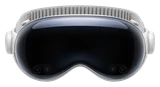
La Jolla
Spatial ComputingCodenameA high-end Quest reported for 2027 to compete with Apple Vision Pro, and cancelled 36 days after it was reported. The same reporter shared a byline on both the plan and the cancellation.
Large Language Model (LLM)
AI & ComputingAn AI model trained on large amounts of language data to understand and generate text or conversation. In wearable products, an LLM often provides the conversational and reasoning layer while cameras, microphones and sensors provide additional context.
LCD
Displays & OpticsLiquid crystal display. It lights the pixels from behind with a backlight, so blacks are not as deep as on OLED. Still common in lower-cost devices.
LCoS
GlassesLiquid Crystal on Silicon — the microdisplay technology inside Specs. Projects through a diffractive waveguide to place digital objects in your field of view. Used in Spectacles 5 and continued in consumer Specs.
LDAC
AudioA Sony-made Bluetooth audio codec that can carry higher-quality sound than standard Bluetooth. Many Android phones support it; iPhones do not.
LED
Displays & OpticsLight-emitting diode. A small, efficient light source used for indicator lights and backlights, and, at tiny sizes, as the pixels of MicroLED displays.
Live AI
GlassesMeta's real-time AI mode on smart glasses — keeps the assistant active and listening continuously rather than requiring a tap. Current Ray-Ban Meta supports approximately 30 minutes of Live AI. Meta Glasses run the same Snapdragon AR1 Gen 1 chip as Ray-Ban Meta Gen 2; Live AI battery duration has not been officially specified for either.
Live Translation
EarbudsAn Apple Intelligence-powered AirPods feature that translates supported in-person conversations when used with a compatible iPhone and supported AirPods.
Loop recording
CamerasRecording that automatically writes over the oldest footage once storage fills up, so it never has to be cleared by hand.
Lossless audio
AudioAudio that keeps every detail of the original recording, with nothing lost to compression. Most Bluetooth connections cannot carry true lossless audio.
Low Power Mode
WatchesA battery-conservation mode on Apple Watch Ultra that disables always-on display, heart rate monitoring, and background app refresh in exchange for extended runtime. Ultra 3 reaches 72 hours in Low Power Mode. Ultra 4 reaches 84 hours in Low Power Mode and 50 hours in normal use.
LPDDR
Chips & StorageLow-power DDR memory, the RAM standard used in phones, tablets and wearables. A higher number, like LPDDR5X or LPDDR6, is a newer and faster generation.
LTE
Connectivity & Standards4G cellular data. A watch with LTE can make calls and use data without your phone nearby.
LTPO
WatchesLow Temperature Polycrystalline Oxide — the display technology enabling variable refresh rates on Apple Watch. The screen can drop to near-zero Hz when the wrist is down and jump to 60Hz when raised.
Luna
GlassesCodenamePre-launch codename for Ray-Ban Meta Audio, Meta's camera-free audio glasses announced at Connect 2026
MagSafe
Batteries & ChargingApple's magnetic system for wireless charging and accessories. The Qi2 standard is based on it.
mAh
Batteries & ChargingMilliamp hours, a unit that measures how much charge a battery holds. A higher number generally means more use between charges.
Malibu 2
Spatial ComputingCodenameA wearable device Meta is reported to be looking to release in 2026. Nothing is known about what it is, including whether it is a headset at all.
Metropolis Studios
AudioA London recording studio. Nothing worked with its engineers to tune Headphone (1) Pro's Flat EQ switch and its "Studio B" spatial audio mode.
Micro-LED
Displays & OpticsA display technology in which microscopic LEDs produce their own light. Micro-LED can provide high brightness and efficiency without a separate backlight, making it attractive for very small, transparent or wearable displays.
Micro-OLED
Displays & OpticsA very small, very dense OLED display built on a silicon chip. Headsets like Vision Pro and many display glasses use it, because the screens sit close to the eye.
MIL-STD-810H
WatchesUS military durability standard covering extreme temperatures (-20°C to 55°C), salt fog, vibration, drops, and altitude. The current Galaxy Watch Ultra holds this certification.
Mixed Reality (MR)
Spatial ComputingA computing mode that combines a view of the physical world with digital objects that can remain positioned in and interact with that environment. It sits between fully immersive virtual reality and simple visual overlays.
mmWave
Connectivity & StandardsA very fast kind of 5G that only works over short distances. It is mostly found on US phone models and in busy city areas.
Modelo
GlassesCodename2026 model codename, reported to arrive as early as June, ahead of Gen 3. Generation unconfirmed; reporting notes it is unclear why it is not called Gen 3, and it may be a new style or brand collaboration. No specs or images yet.
Modem
Chips & StorageThe chip that connects a device to cellular networks like LTE and 5G. Apple has started putting its own modems in some devices instead of Qualcomm's.
Mojito VIP
GlassesCodename2026 model codename, reported for a December 2026 launch. Generation and form factor unconfirmed.
Motion-to-photon latency
Spatial ComputingThe delay between a user's movement and the display updating to reflect that movement. Lower motion-to-photon latency makes augmented and virtual reality feel more immediate and can reduce discomfort.
Multi-Band GNSS
WearablesA GPS mode that receives two frequencies from each satellite, usually L1 and L5, rather than one. Comparing the two lets the watch spot signals that have bounced off a building or a canyon wall and discard them, which is the largest source of error in exactly the places tracking goes wrong. It is the most accurate mode most watches offer and the most expensive in battery. Also called dual-frequency.
Multimodal AI
AI & ComputingAI that can work with more than one type of input, such as text, speech, images and video. In wearable devices, multimodal AI can combine what the wearer says with what cameras or sensors detect.
Muse Spark
GlassesMeta's AI model from its Superintelligence Labs. Ships on all new Meta Glasses and rolled out via update to existing Ray-Ban Meta and Oakley Meta glasses starting May 2026.
MWC
Industry & EventsMobile World Congress, the phone industry's big trade show, held every year in Barcelona in late February or early March.
N100 / Vision Air
GlassesCodenameThe cheaper Vision Pro Apple reportedly paused in 2025 to refocus on glasses
N237
WatchesCodenameApple Watch Series 12 Wi-Fi model — internal hardware codename from iOS 26 beta code
N237 / N238
WatchesApple's internal hardware codenames for Apple Watch Series 12: N237 is the Wi-Fi model and N238 is the Cellular model. Both identifiers appeared in a leaked iOS 26 firmware build in December 2025, where they were listed under the Watch8 chip family with a new T8320 processor.
N238
WatchesCodenameApple Watch Series 12 Cellular model — paired with N237 in the same iOS 26 leak
N401
GlassesCodenameCodename for the next, display-equipped Apple glasses that follow N50. One roundup also frames N401 as the name of the glasses' custom chip, so the mapping is not a clean one-to-one.
N50
GlassesApple's internal codename for the first Apple Glasses model. Reported to be display-free and camera-equipped, expected late 2027 -- not confirmed by Apple. Apple uses N-prefixed codenames for hardware projects during development.
NAND flash
Chips & StorageThe type of memory chip that stores your apps, photos and files. It keeps data when the power is off. The storage size on a phone, like 256GB or 1TB, is NAND.
NB-NTN
WatchesNon-Terrestrial Network — a satellite connectivity standard built into Snapdragon Wear Elite. Allows the watch to send messages via satellite when cellular is unavailable. Whether Samsung enables this feature in software at Ultra 2 launch is unconfirmed.
Neural Engine
Chips & StorageApple's name for the part of its chips built to run AI and machine learning tasks quickly while using little power.
NFC
Connectivity & StandardsNear-field communication. A short-range wireless link used for tap-to-pay, transit cards and pairing devices by touch.
Nits
Displays & OpticsA measure of screen brightness. A higher number means the screen is easier to read in bright sunlight.
NPU
GlassesNeural Processing Unit. A dedicated chip block optimized for running AI models locally. NPUs enable always-on voice detection, camera processing, and sensor fusion without draining the battery — essential for wearables that run all day.
OIS
CamerasOptical image stabilization. Hardware that moves the lens or sensor to cancel out hand shake, for sharper photos and steadier video.
OLED
Displays & OpticsOrganic light-emitting diode. A display where every pixel makes its own light, so blacks are truly black and screens can be thin. Most phones and watches use OLED.
On-device AI
AI & ComputingAI that runs on the device's own chip instead of a cloud server. It can work offline, respond faster and keep more data private, but it is limited by the chip's power and memory.
One UI Watch 8
WatchesSamsung's watch OS layer running on Wear OS, expected at Ultra 2 launch. Powers Galaxy AI health features including the updated Samsung Health app with Energy Score, Vitals, Heart Health Score, and Daily Cardio Load.
Open-ear audio
AudioSpeakers that deliver sound without sealing the ear canal. Smart glasses and open-ear earbuds use this approach so the wearer can hear music, calls or assistant responses while remaining aware of surrounding sound.
OTA update
AI & ComputingA software update sent to a device wirelessly, usually through its phone app. OTA updates can add features or fix bugs after launch.
Passthrough
Spatial ComputingA headset view of the physical world captured by external cameras and shown on the displays inside the headset. Better passthrough generally means lower latency, sharper imagery and a more convincing blend between physical and digital content.
Periscope lens
CamerasA telephoto camera that bends light sideways inside the phone with a prism, so it can zoom far without a thick camera bump.
Personalized Spatial Audio
EarbudsApple’s spatial-audio experience with dynamic head tracking, designed to place sound around the listener.
Phoenix
Spatial ComputingCodenamePre-launch codename for Meta VR Glasses, the tethered VR glasses Meta announced at Connect 2026
Photochromic lenses
GlassesLenses that automatically darken in sunlight and clear indoors by reacting to UV light. Samsung Galaxy Glasses offer photochromic lenses as an option, eliminating the need to swap frames between indoor and outdoor environments.
Pismo High
Spatial ComputingCodenameThe cancelled high-end half of the same Quest 4 plan, intended as a successor to the Quest 3. Cancelled alongside Pismo Low.
Pismo Low
Spatial ComputingCodenameA cancelled Quest 4 prototype, positioned similarly to the Quest 3S. Reported as part of a two-headset 2026 Quest 4 plan and cancelled before market.
Polarized lenses
Displays & OpticsLenses with a filter that cuts glare, the harsh shine bouncing off water, roads and car hoods. Bright scenes get easier on the eyes. Some screens can look dim or blank through them. Polarization is separate from UV protection, so a lens can have one without the other.
PPG (Photoplethysmography)
EarbudsOptical sensor technology used in AirPods Pro 3's in-ear heart rate monitoring. A small LED shines light into the ear canal and measures blood flow changes. Same principle as Apple Watch's heart rate sensor, applied to an in-ear form factor. Enables AirPods Pro 3 to track heart rate across 50 workout types without a paired Apple Watch.
Process node
Chips & StorageThe manufacturing generation used to make a chip, named in nanometers, like 3nm or 2nm. A smaller number usually means more transistors in the same space, for better speed and battery life. The name is a label, not a literal size.
Project Mulberry
WatchesApple's internal codename for an LLM-powered health coaching concierge for the iPhone Health app. Gurman reported it targeting spring 2026 as an iOS 26.x feature; it was delayed. The feature runs on iPhone, not Apple Watch directly.
ProMotion
Displays & OpticsApple's name for its adaptive refresh rate displays. They run at up to 120Hz for smooth motion and slow down when nothing is moving to save battery.
Puffin
Spatial ComputingCodenameEarlier reported codename for the same ultralight headset with a tethered compute puck
Puffin / Phoenix
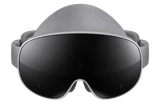
Spatial ComputingCodenameTwo codenames for the SAME ultralight mixed-reality headset: a lightweight goggles-style device running Horizon OS with the battery and compute in a tethered puck. Originally targeted at 2026, delayed in December 2025 to the first half of 2027. Business Insider's reporting uses Phoenix; earlier coverage used Puffin.
QHD
Displays & OpticsQuad HD, a resolution of about 2560 by 1440 pixels. Sharper than standard 1080p HD. Also called 2K.
Qi2
Batteries & ChargingThe newest wireless charging standard. It adds magnets, like Apple's MagSafe, so the charger lines up on its own and can charge faster.
QLC
Chips & StorageQuad-level cell storage. Each memory cell holds four bits, so a chip can pack in more storage for less money. The trade-off is slower writing and less endurance than TLC.
RAM
Chips & StorageWorking memory. It holds the apps and data a device is using right now, and it is cleared when the power is off. More RAM keeps more apps open and helps with on-device AI.
RBM2 Refresh
GlassesCodenameReported fall-2026 codename. The name ("RBM2" = Ray-Ban Meta 2) almost certainly means a refresh of the Gen 2 line that launched at Connect 2025, not a new generation.
Readiness score
Health & FitnessA daily estimate of how prepared the body is for physical or mental strain, usually based on signals such as heart-rate variability, resting heart rate, sleep and recent activity. Different companies calculate readiness differently, so scores from different platforms are not directly equivalent.
Recording indicator
Sensors & TrackingAn outward-facing light that indicates when a wearable camera is recording. Some devices link the indicator directly to camera operation so recording cannot continue normally if the light is covered or disabled.
Refresh rate
Displays & OpticsHow many times per second a screen updates, measured in hertz (Hz). A higher rate, like 120Hz, makes scrolling look smoother but can use more battery.
REM sleep
Health & FitnessThe stage of sleep when most dreaming happens. Trackers estimate it along with light and deep sleep.
S10
WatchesApple's watch chip, fabbed by TSMC on 4nm. Ships in Apple Watch Series 10, Series 11, and Ultra 3, the same silicon carried across three straight generations. Built on the A15's architecture with a 4-core Neural Engine and an integrated U1 ultra-wideband chip.
S11
WatchesThe chip in Apple Watch Series 12 and Ultra 4: a 64-bit dual-core processor, per Apple's spec pages. It replaces the S10 that Series 10, Series 11 and Ultra 3 shared. Reports before launch called it the S12.
Sapphire crystal
Durability & MaterialsA very hard, scratch-resistant clear material made from lab-grown sapphire. It covers the screens of premium watches and some camera lenses.
Satellite SOS
WatchesEmergency communication via satellite without cellular or Wi-Fi. Pixel Watch 4 LTE models were the first smartwatch to support satellite SOS standalone, without needing a paired phone nearby. Most Apple Watch and Galaxy Watch models require the paired iPhone or Galaxy phone to initiate satellite emergency calls; Apple Watch Ultra 3 is the exception, with its own satellite hardware that works without a nearby iPhone. Pixel Watch 4 works independently.
Screenless fitness tracker
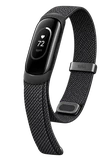
Health & FitnessA health or activity wearable with no display, designed to collect data continuously while a phone app handles charts, coaching and interaction. Removing the screen can reduce distraction and power use but makes the companion app more important.
Scriber (RW7002)
GlassesCodenameFCC filing codename (Mar 2026) that turned out to be the Gen 2 "Scriber Optics" prescription frame, not a Gen 3 device. Early outlets reported these as Gen 3 production units — the launch in April 2026 confirmed they are Gen 2 hardware with the same AR1 chip and 12MP camera.
Scriber Optics (Gen 2)
GlassesCodenameA Gen 2 prescription retail frame (rounded) at $499. Announced and open for preorder 31 March 2026; reached optical retail 14 April 2026. Shares a name with the FCC Scriber codename; whether they are related is unconfirmed.
SDK
AI & ComputingSoftware development kit. The tools a company gives developers so they can build apps for its device.
Silicon-carbon battery
Batteries & ChargingA newer lithium battery design that adds silicon to one side of the cell. It stores more energy in the same space, which lets thin phones fit bigger batteries.
Skin temperature
Health & FitnessThe temperature on the surface of your skin, tracked by rings and watches, usually overnight. Changes from your normal can hint at illness, stress or cycle changes.
Sleep apnea
Health & FitnessA condition where breathing stops and starts during sleep. Some watches and rings can flag signs of it, but a doctor has to diagnose it.
Sleep apnea screening
Health & FitnessWearable analysis that looks for patterns associated with breathing interruptions during sleep. Screening can identify a reason to seek medical evaluation but is not necessarily the same as diagnosing sleep apnea.
SM-L345U
WatchesCodenameGalaxy Watch 9 model number — appeared in GSMA IMEI database February 2026 and Samsung Canada trade-in site May 2026
Snap OS 2.0
GlassesSnap's proprietary operating system for Specs. Released Sept 2025 with browser, gallery, Spotlight, and hand tracking. All 4 million developer Lenses run on it at launch.
Snapdragon AR1 Gen 1
GlassesQualcomm's chip purpose-built for smart glasses. Handles AI inference, camera processing, and audio at low power. The same chip powers both the Meta Ray-Ban Gen 2 and Samsung Galaxy Glasses.
Snapdragon W5 Gen 2
WatchesQualcomm's 4nm Wear OS chip, first shipping in the Google Pixel Watch 4. Quad-core CPU plus a low-power Cortex-M55 coprocessor, adding satellite messaging support and roughly 20% better power efficiency over its predecessor.
Snapdragon Wear Elite
WatchesQualcomm's 3nm wearable chip. Reported as the first Snapdragon in a mainstream Samsung Galaxy Watch, but the Watch 9 chip is contested: SamMobile reports the Snapdragon Wear Elite goes to the Ultra 2 only, with the Watch 9 keeping the Exynos W1000. If the Watch 9 does adopt it, estimates put it near 50 hours on the 40mm, up from 40 hours.
Solid-state battery
Smart RingsReported Galaxy Ring 2 power source — would enable a thinner profile and could push past the 9–10 day target currently cited by sourced reports (ETNews, May 2026). Solid-state cells avoid liquid electrolyte, allowing more compact designs. Multi-week battery life figures are unconfirmed and unsupported by current sourcing.
Sony IMX681
GlassesA reported 12MP sensor for Samsung's eyewear. Leaks disagree over whether the first model has one or two cameras; Samsung has confirmed only a built-in camera, not its sensor, resolution or count.
Spatial anchoring
Spatial ComputingThe process of attaching a digital object to a fixed position in the physical world. If a virtual screen is placed on a wall, spatial anchoring is what keeps it on that wall as the wearer moves.
Spatial audio
AudioSound that seems to come from all around you, not just left and right. With head tracking, it stays in place as you turn your head.
Specs
GlassesThe consumer AR glasses launching fall 2026 at $2,195. Official name replacing the Spectacles brand.
Specs Inc.
GlassesThe independent subsidiary Snap spun out in January 2026 to run its AR glasses hardware as a standalone hardware business.
Spectacles
GlassesSnap's original brand for AR hardware. Retired at AWE 2025 when the consumer product was renamed Specs. Spectacles now refers only to developer kit devices.
Spectacles 5
GlassesThe 2024 developer-only kit (226g, $99/mo lease, 45-min battery, 46° FOV). Not the consumer product — a separate device for developers to build Lenses.
SpO2
Smart RingsBlood oxygen saturation. Smart rings with SpO2 sensors can flag overnight dips that may indicate sleep apnea. SpO2 tracking debuted on Apple Watch Series 6 in 2020; an Apple Ring would likely include it.
T8320
WatchesThe internal codename reported in leaked firmware for Apple's new watch chip, in the 'Watch8' family. Apple named the chip the S11.
Telephoto lens
CamerasA camera lens that brings distant subjects closer without losing detail, like 3x or 5x optical zoom.
Tensor NPT
WatchesA custom Google smartwatch chip reported by Android Authority in October 2024, described as 1x Cortex-A78 + 2x Cortex-A55 and optimized for wearable workloads. It did not ship in Pixel Watch 5, which uses Qualcomm's Snapdragon W5 Gen 2 Accelerated; a Google Play Console listing found in July 2026 pointed at Qualcomm and proved right.
TLC
Chips & StorageTriple-level cell storage. Each memory cell holds three bits. It is the usual choice in phones because it balances cost, speed and how long the storage lasts.
Training load
Health & FitnessAn estimate of how much physiological stress recent exercise has placed on the body. It usually combines workout intensity and duration over time to show whether training is increasing, maintaining or exceeding a person's normal load.
TSMC
Chips & StorageTaiwan Semiconductor Manufacturing Company, the contract chipmaker that builds processors for Apple, Qualcomm and many others.
USB-C
Batteries & ChargingThe oval, reversible connector now standard on phones, earbud cases and many wearables for charging and data.
UV380
Displays & OpticsA lens rating meaning it blocks ultraviolet light up to a wavelength of 380 nanometers. That covers UVB and most UVA. UV400 goes a little further and covers all of it.
UV400
Displays & OpticsA sunglass rating meaning the lenses block light up to a wavelength of 400 nanometers. That covers all UVA and UVB, the ultraviolet light that harms eyes and skin. It is the maker's claim about the lens coating. Lens color does not tell you: a dark lens with no UV protection can let UV through.
UVA and UVB
Displays & OpticsThe two kinds of ultraviolet sunlight that reach the ground. UVA goes deeper into skin and ages it. UVB burns it. Both can harm eyes over time. When a maker says its lenses block 100% of UVA and UVB, that is a claim about the lens itself, not the tint.
UWB
WatchesUltra-Wideband — a short-range radio technology for precise spatial tracking. Watch 9 adds directional Find My Phone, digital car key support, and proximity-based unlocking. Galaxy Watch 8 did not have UWB.
Vapor chamber
Batteries & ChargingA thin, sealed metal plate with liquid inside that spreads heat away from the chip, helping a phone stay cool and fast under heavy use.
Virtual reality (VR)
Spatial ComputingA headset experience that replaces your view of the world with a fully digital one.
Visual Intelligence
EarbudsApple's AI system that uses camera input to identify real-world objects and answer contextual questions. On iPhone it works via the Camera app. On AirPods Ultra, infrared sensors in the stems feed Siri real-time environmental data — recipe suggestions, walking directions, object identification — without capturing or storing images.
Vitals
WatchesSamsung's health feature confirmed June 4, 2026. Analyzes five overnight bio-signals — heart rate, HRV, respiratory rate, skin temperature, blood oxygen — against your personal baseline, alerting when deviation suggests illness or recovery needs.
VO2 max
Health & FitnessThe most oxygen your body can use during hard exercise, a common measure of fitness. Watches estimate it from your heart rate and pace.
Watch8
WatchesCodenameSilicon family designation for the new T8320 chip inside Series 12 and Ultra 4 — successor to Watch7 (T8310) shared by Series 9, 10, and 11
watchOS 27
WatchesApple's watch software, released September 14, 2026, the week Series 12 ships. Brings Siri AI to Apple Watch for the first time as a standalone app — no iPhone required for conversational AI. Also adds standalone Workout Buddy (previously required iPhone 15 Pro or newer), perimenopause and menopause Cycle Tracking support, and a dynamic app grid.
Waveguide
GlassesThe transparent optical element in Specs that guides light from the LCoS display into the wearer's eyes. Uses billions of nanoscale diffraction gratings. Enables see-through AR without a mirror or prism.
Wear OS
WatchesGoogle's smartwatch operating system, at version 6 on Pixel Watch 4. Built on Android, developed with Samsung who contributed UI layer for Galaxy Watch. Pixel Watch runs stock Wear OS without Samsung's overlay. The Android version it needs rises with each generation: Pixel Watch 4 needs Android 11 or later, Pixel Watch 5 needs Android 12 or later. Pixel Watch is Android-exclusive with no iPhone support.
WWDC
Industry & EventsApple's Worldwide Developers Conference, held every June, where Apple shows its next software, like iOS and watchOS.
Reporting and grading terms used on the Leak Index and roadmap pages — how we credit a leak, and how we decide whether one turned out to be right.
Corroboration
iDevice MethodologyA separate source independently reporting information that supports an existing leak, from its own reporting rather than by repeating the first source. On a beat where most names appear only once, corroboration carries more weight than any single byline's track record.
Independent origin
iDevice MethodologyA leak credited to a source that reported it first, from its own reporting rather than repeating someone else's. A source earns one leak for each product it reveals something genuinely new about; an outlet that later restates the same revelation is not a second independent origin.
Not settled
iDevice MethodologyA leak whose product has already been announced, but the announcement did not confirm or contradict what was reported — the detail was simply never addressed. Different from Unresolved, where the announcement has not happened at all yet.
Pickup
iDevice MethodologyLater coverage that repeats a revelation another outlet already reported, without adding anything genuinely new. A pickup does not earn its own leak credit and is not counted as a second, independent origin — it can inflate how a beat looks if left uncounted.
Settled
iDevice MethodologyA leak whose product has since been announced or released, so the outcome — right, wrong, or partially right — can be graded against what actually shipped. Accuracy is reported only over settled leaks, never over every leak tracked.
Unresolved
iDevice MethodologyA leak about a product that has not yet been announced or released, so there is nothing to grade it against yet. Unresolved does not mean wrong, and it is a different state from a leak whose announcement already arrived and settled nothing either way.
Withdrawn by the source
iDevice MethodologyA case where the original outlet later retracted or materially revised its own report before the real outcome was known. A correction is not automatically more accurate than what it replaced — iDevice checks a revised figure against independent sources rather than treating a source's own walkback as the last word.