




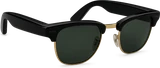

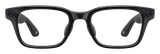






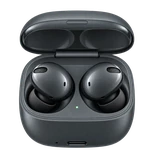
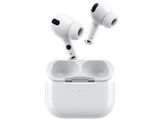
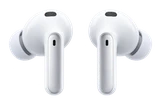

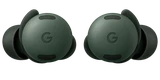


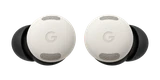

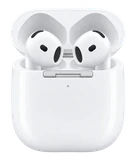
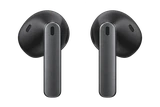










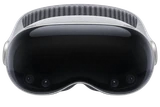


























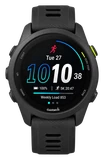


A beautiful buyer's guide to your product.
The page buyers read right before they decide, with an AI agent on it that answers their questions from the Guide's sourced facts and shows its sources. Every fact is quoted from your own pages and kept current, with your photos, your offer and your answers on it, labeled sponsored. Send us a unit and a hands-on review goes on the same page.
It is also a source AI assistants can check, designed to help what they tell buyers match your own pages.
What you get
01
An AI agent that answers buyers
A buyer asks the Guide a question and gets a plain answer from its sourced facts, with a source pill on what it states. It says so when we have not checked something. On a sponsored Guide, a card from you can sit under an answer, labeled sponsored.
02
A buyer's guide that lasts
A Guide to your product on idevice.com, written from your own pages with the maker's quote behind every fact. It is the page a buyer reads before buying, and we keep it current. Your photos, your offer and your answers sit on it, labeled sponsored.
03
A hands-on review
A review on the same page, if you send us a unit.
04
A monthly check of the assistants
What ChatGPT, Claude, Gemini and Perplexity say about your product, with the wrong answers shown beside what your own page says.
What we need from you: your go-ahead, your answers on any fact your own pages leave open, and a unit if you want a review.
What stays ours: the verdict, the facts and the corrections are never for sale. Sponsored pages are labeled as sponsored.
The Guide is designed to give assistants a better source. Assistants decide what they say, so we check every month and show you what changed. It is a flat annual price, cancelable. Ask us for the details.
What's inside a Guide
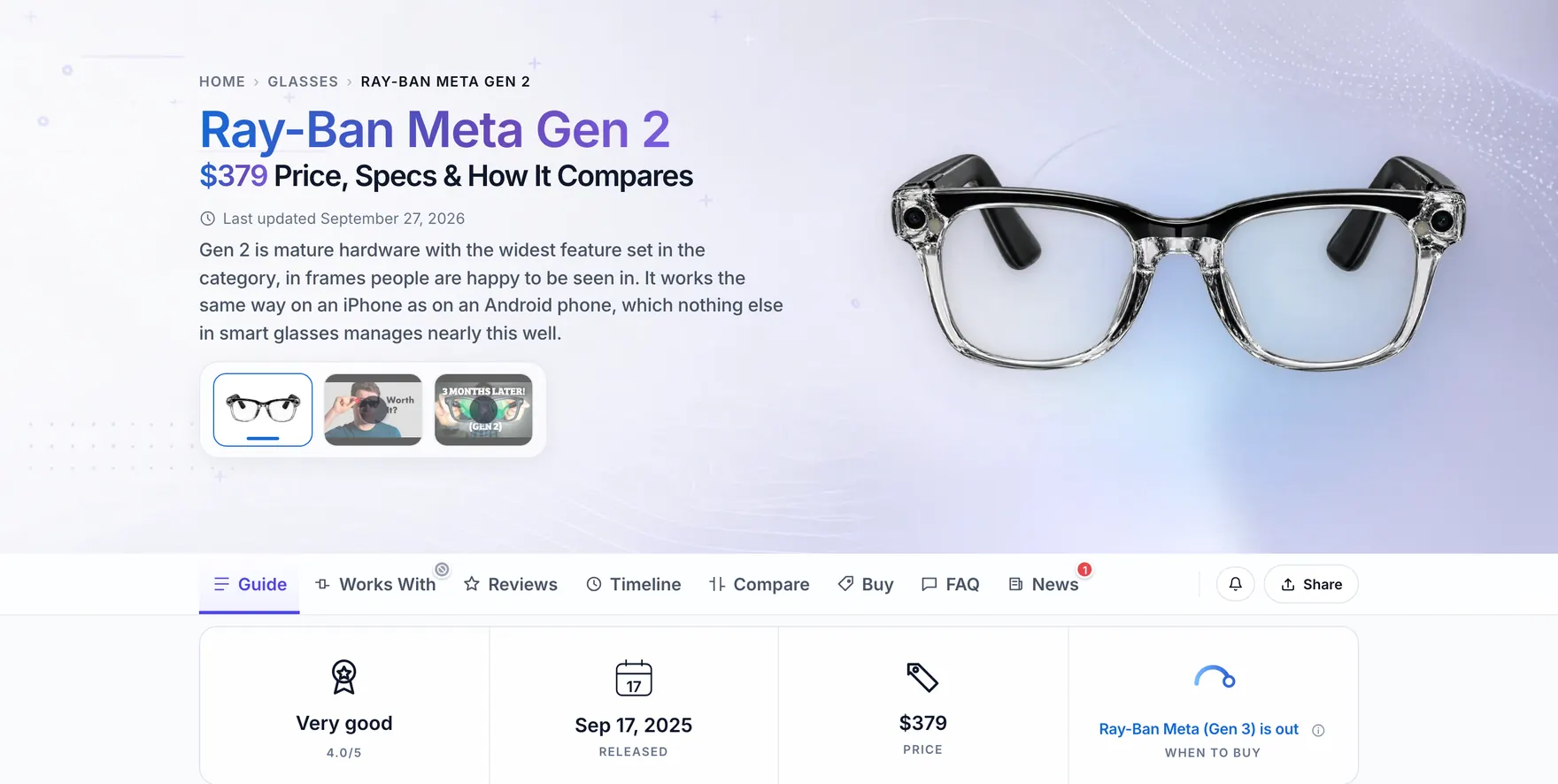
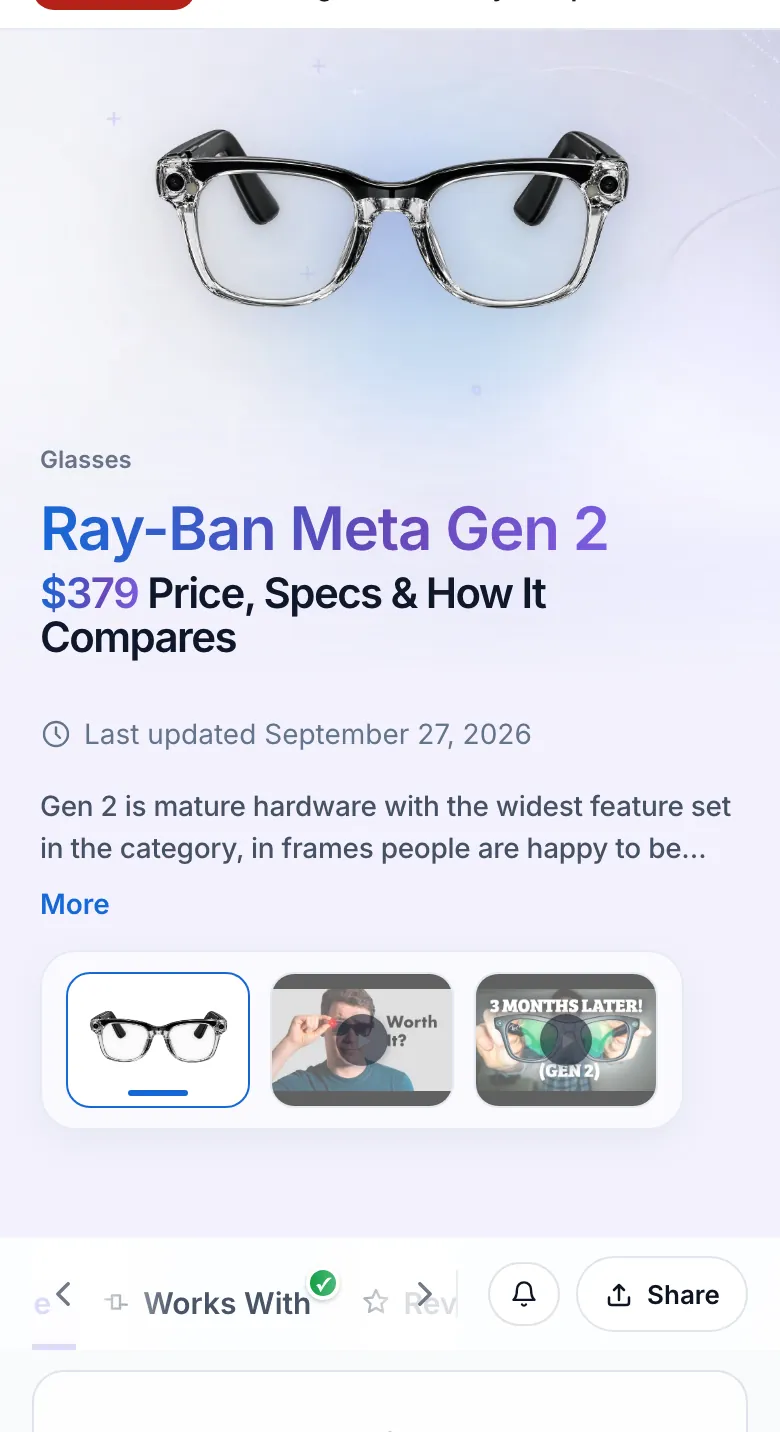
These are real captures of a live, public Guide on idevice.com. Yours would carry your product, your sources and your offer.
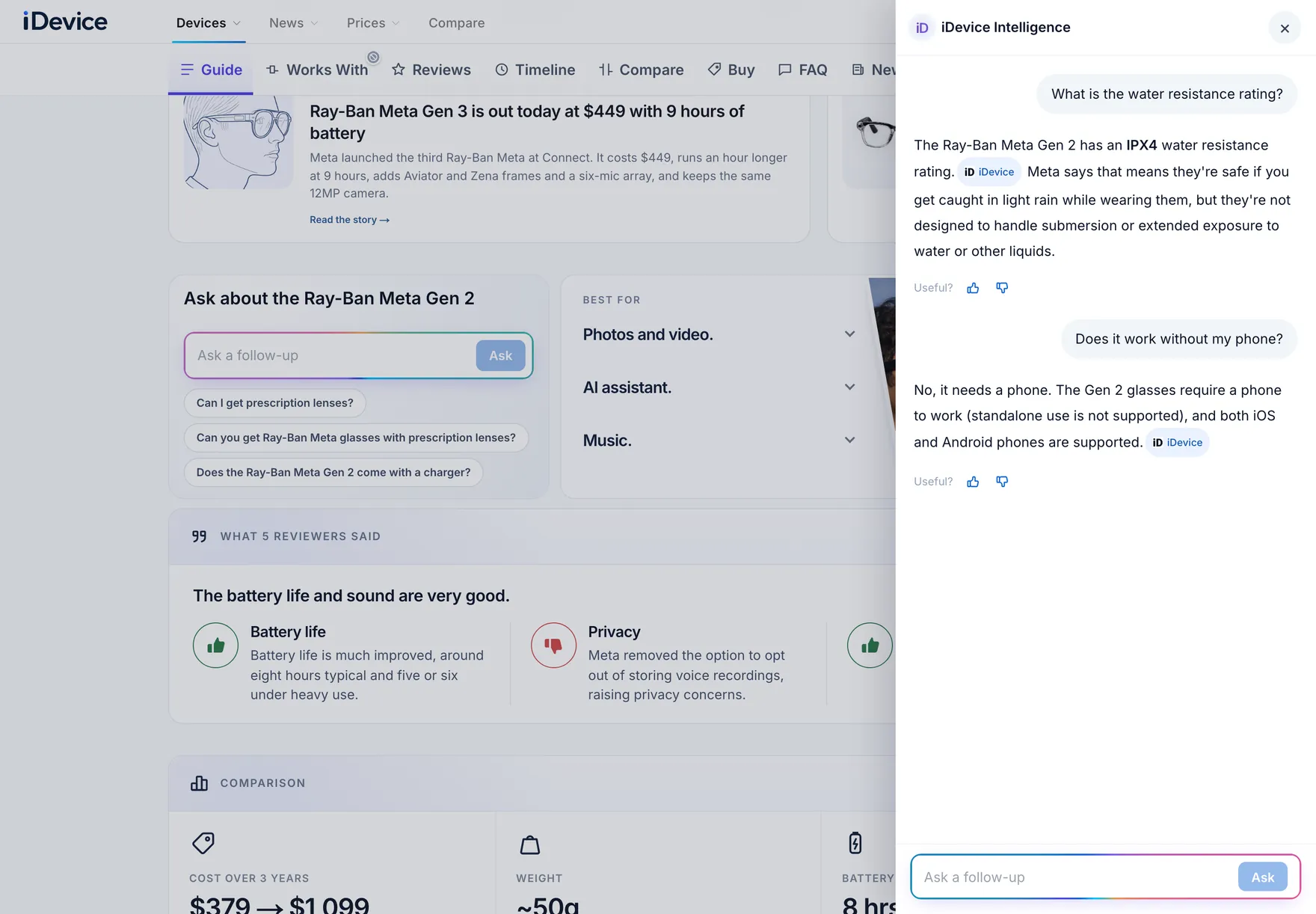
An AI agent that answers buyersA buyer types a question and gets a plain answer from the Guide's sourced facts, with a source pill on the facts it states. These questions were asked on the live Guide. 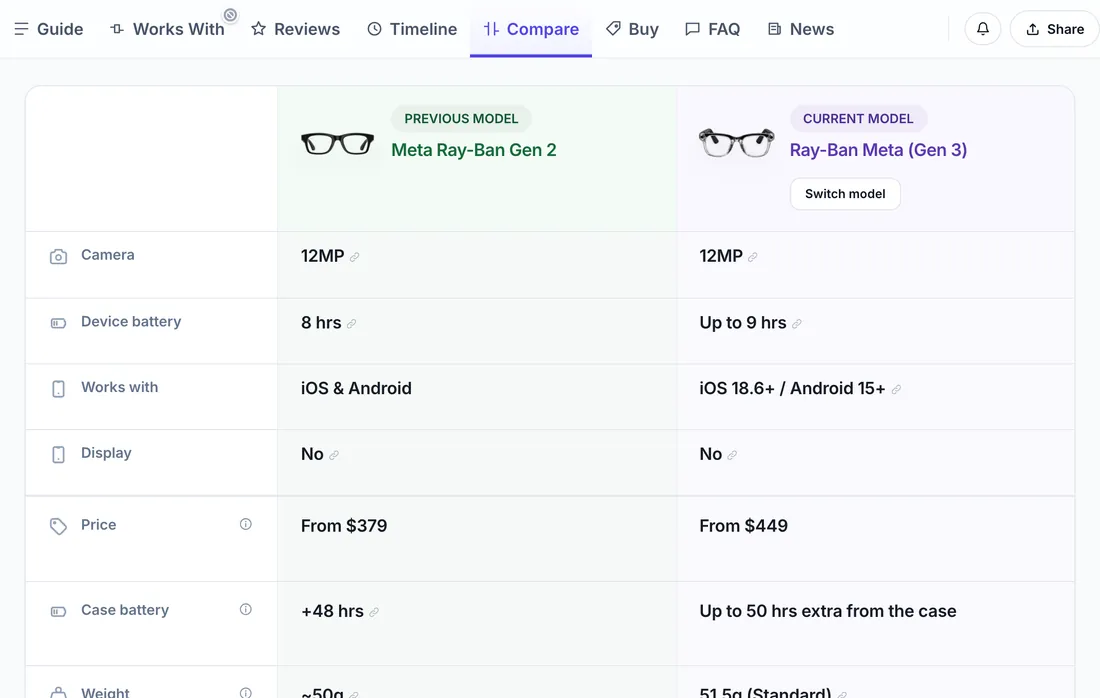
Facts with their sourcesSpecs next to the other model, with a source link beside the facts. 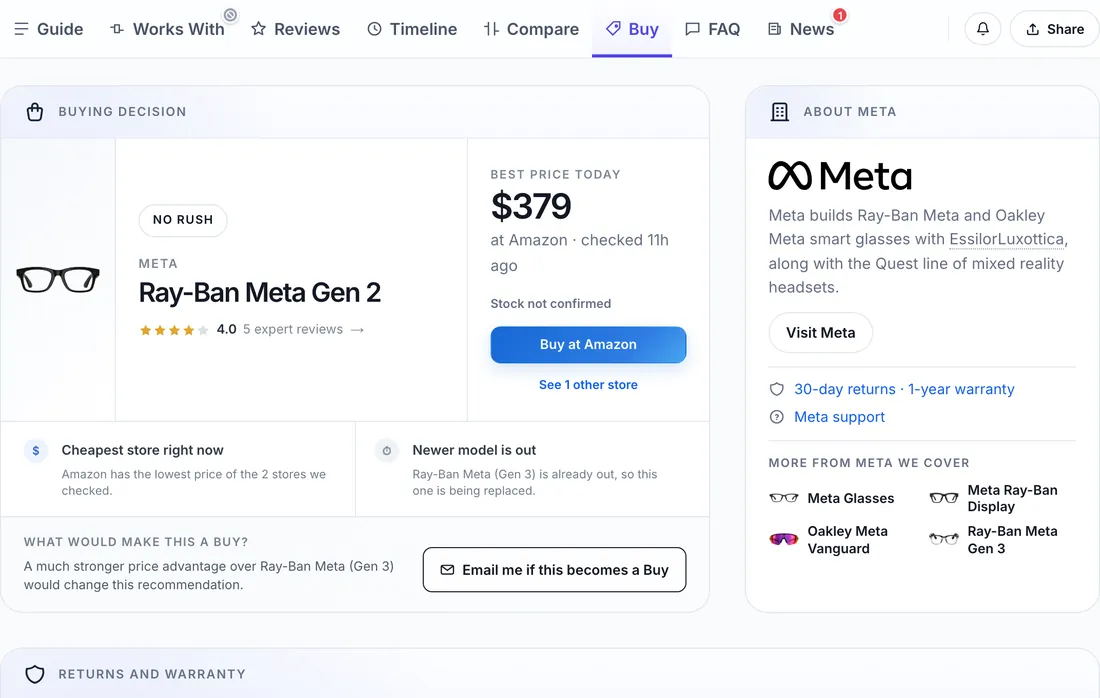
Price and where to buyThe price, the store, and the maker's return and warranty terms in one place. 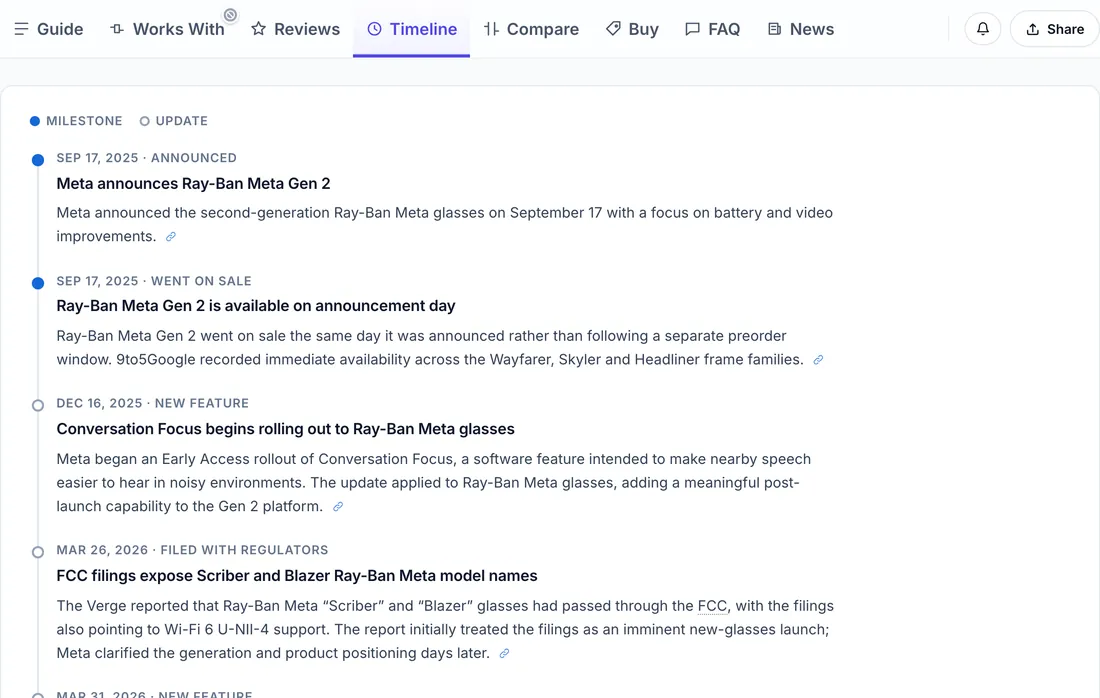
A dated timelineEvery announcement, launch and update in order, each with its source. 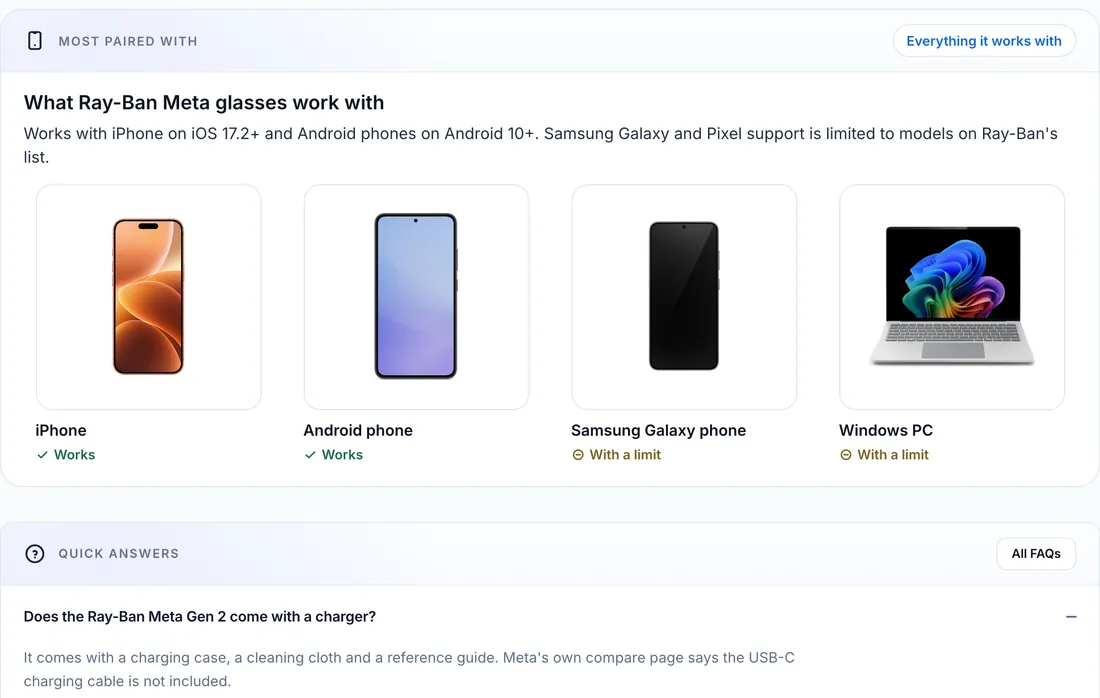
What it works withWhich phones and computers it works with, and quick answers before a buyer has to ask. 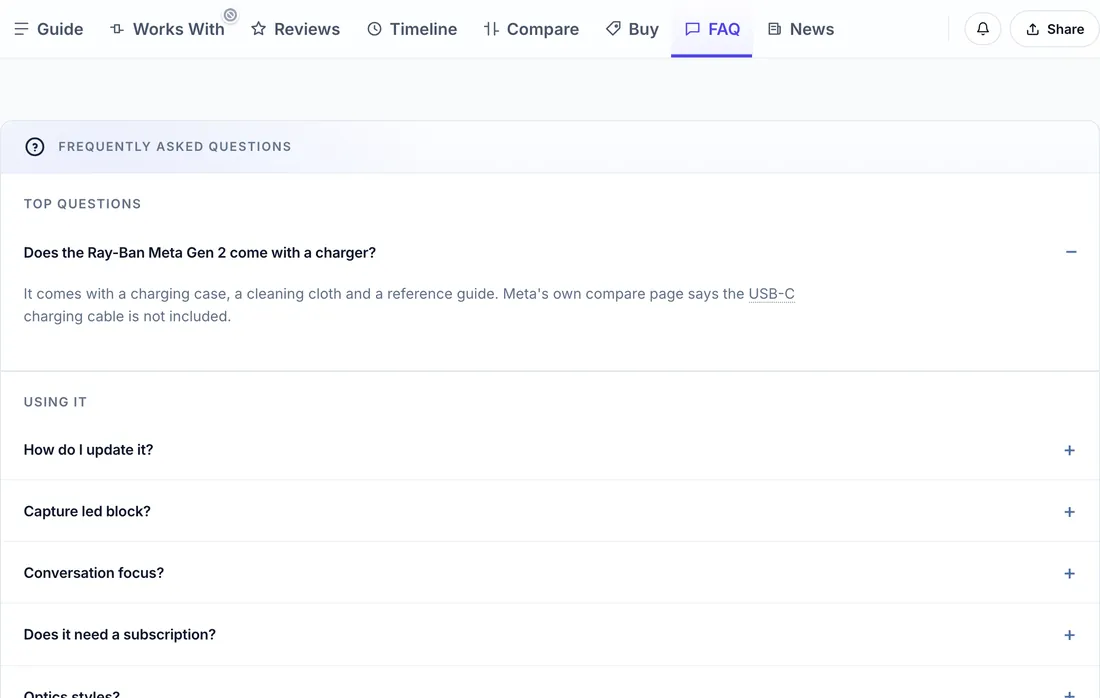
The questions buyers askThe questions people ask before they buy, answered in plain words.

Captured from the live Ray-Ban Meta Gen 2 Guide on October 1, 2026. The chat questions were typed on the live Guide and the answers are shown as they came, unedited. The phone-width view is a separate question asked on a phone-sized screen. Prices and dates on a live Guide change as the maker's pages change.Open the live Guide
Proof you can open today
- A review on launch day
Nothing sent us a review unit. Our Nothing Headphone (1) Pro review went live on September 29, 2026, the day the headphone went on sale.
Read the review - Open to assistants
A free, public MCP server at idevice.com/api/mcp, with no key and no account, and fair-use limits of 30 calls a minute and 500 a day per IP address. An assistant can look up a product's price, dates and specs, each with its source.
About the server - A source behind every fact
Every fact on a Guide links to the page it came from, with the maker's exact words kept behind it.
See a Guide
Why accuracy matters now
A Guide is also a public page an assistant can check. Here is the published research on what AI assistants cite, how many buyers ask them, and how often they get answers wrong.
- 01An assistant answersA buyer asks ChatGPT, Claude, Gemini or Perplexity about your product.
- 02Checked against your pageWe read the answer beside what the maker's own page says.
- 03A sourced iDevice pageA public Guide gives the fact, links to the maker's page and keeps the exact words.
- 04Re-checked monthlyWe ask again every month and show what changed.
AI leans on independent sources
In studies of what assistants cite, most of the links come from independent sources, not from the brand's own site.
- 93.7% and 93.6%
of the links Claude and GPT cited for consumer-electronics ranking prompts were independent sources: review sites, media outlets and government pages. Maker and retailer sites made up very little. The sources they cited most often included TechRadar, Tom's Guide and RTINGS.
Share of cited links from independent sources
SourceUniversity of Toronto, Generative Engine Optimization: How to Dominate AI Search (arXiv 2509.08919) , September 2025.
- 84%
of more than 25 million links cited by ChatGPT, Claude and Gemini across 17 industries were earned media: journalism, academic research, government and encyclopedia pages, and third-party corporate content. Paid and advertorial content was 0.3%.
Share of links cited
SourceMuck Rack, What Is AI Reading? , May 2026.
- 48% against 23%
of 23,387 citations to prompts that named a brand were earned media (editorial, forums, review sites, reference sites), against 23% from the brand's own site. ChatGPT, Perplexity, Gemini, AI Mode and AI Overviews were tested.
Share of 23,387 citations
- Earned media48%
- The brand's own site23%
- Other sources
SourceOmniscient Digital and Peec AI, How LLMs Source Brand Information , January 2026.
It depends on the question. In the same Omniscient data, earned media was 82% of citations on customer-review questions, but the brand's own site was cited about 50% of the time on questions about functionality and integrations. Independent sources lead when the question is which one, is it worth it, or how does it compare.
In our own monthly test of 50 buyer questions, put to four assistants with web search on in October 2026, about 30% of answers linked iDevice or used it as a source. The questions were about products that already have a public iDevice Guide, such as Apple, Samsung, Meta and Google devices, so it says nothing about any one brand.
Buyers are asking AI
Surveys of shoppers show a large share already use AI assistants, and many use them to choose what to buy.
- 49%
of US adults said they ever use AI chatbots such as ChatGPT, Gemini or Copilot, in a survey of 5,119 adults in February 2026. This counts any use, not only shopping.
Share of US adults surveyed
49%SourcePew Research Center, Americans and AI , June 2026.
- 39%
of 5,000 US consumers said they have used generative AI for online shopping.
Share of US consumers surveyed
39%SourceAdobe, survey of US consumers , March 2025.
- 58%
of 12,000 consumers in 12 countries said they have replaced traditional search engines with generative AI tools for product and service recommendations. They were surveyed in October and November 2024.
Share of consumers surveyed
58%SourceCapgemini Research Institute , January 2025.
- 33%
of US holiday shoppers surveyed said they plan to use generative AI in their shopping journey, more than double the 15% a year earlier. This is a plan, not past use.
Share of US holiday shoppers surveyed
SourceDeloitte, 2025 Holiday Retail Survey , October 2025.
AI answers contain errors
When researchers check what assistants say against the facts, they keep finding mistakes.
- 86%
of 220 shopping questions put to ChatGPT, Claude, Gemini and Perplexity (free and paid versions) produced a factual conflict: contradictory prices, stale products shown as current, or specs the engines could not agree on. For questions comparing one product with another, it was 97%. The study comes from Product.ai, a product-data company. We read it through Tech.co's report because Product.ai's own page blocks automated access.
Share of questions with a factual conflict
SourceProduct.ai AI shopping study, as reported by Tech.co , September 2026.
- 75%
of the brands that reviewed at least 20 facts AI engines had stated about them found at least one false one. Across all 32,556 facts about 1,704 brands, 9.2% were marked incorrect by the brands that reviewed them, and prices were wrong most often, at 13.5%. The two figures count different things: one is a share of brands, the other a share of facts. Mostly software and business brands.
Brands that reviewed 20 or more facts: the share that found at least one false one
75%SourceSearchable, The AI Brand Misinformation Report , July 2026.
- 45%
of answers from ChatGPT, Copilot, Perplexity and Gemini to news questions had at least one significant issue, as rated by journalists from 22 public-service media organizations in 18 countries. 31% had a significant problem with sourcing. These were news questions, not product questions.
Share of answers to news questions
SourceEBU and BBC, News Integrity in AI Assistants , October 2025.
These studies test different things, so their figures are not comparable. What they share is the finding that an assistant's answer can be wrong. In the shopping and brand studies, the facts that change most, such as prices, were the ones that conflicted or were wrong most often.
Questions
What is a Guide?
A Guide is a public page about one product on idevice.com. It is the page a buyer reads right before they decide: the price and where to buy, specs next to other models, what it works with, a dated timeline, returns and warranty, and the questions buyers ask.
Every fact links to the page it came from. A sponsored Guide also carries the maker's photos, offer and answers, and says it is sponsored. See a live one: Ray-Ban Meta Gen 2.
What is the AI agent on a Guide?
It is a question box on the Guide that opens a chat. A buyer types a question, such as whether the glasses work without a phone, and gets a short answer in plain words. You can try it on a live Guide: Ray-Ban Meta Gen 2.
It answers from the Guide's sourced facts: the maker's own pages, plus reviews and our news coverage. Each fact it states carries a source pill that opens the page behind it. Anything specific about the product comes from those facts, not from memory. If we have not checked something, it says so instead of guessing, and where it adds general background it labels that as not checked by iDevice.
For a product that is not on sale yet, it calls a report a report and says who reported it. It gives a release date or a price only when we have one with a stated basis, and says it is not known yet when we do not. It does not promise a price, a deal or an outcome.
A sponsored Guide includes it. A card from you can sit under an answer on the right topic, labeled sponsored. The card does not change the answer, and the verdict and the facts stay ours.
Why not just put this on my own website?
You should, and keep it accurate. A correct page on your own site is the first thing to fix.
It is not enough on its own, for two reasons. First, the research above found that on ranking, comparison and review questions most of the links assistants cited were independent pages. One study found a brand's own site was cited far more often for plain functionality questions than for customer-review questions. Second, your site is not the only place a fact lives. Some of the wrong answers we have traced came from older articles and press releases on other sites, which you cannot edit.
Our page does not replace yours. It is an independent page that points to your own page for each fact, so an assistant or a buyer can check it against the source.
How does it work?
We read your own pages and write a Guide to your product on idevice.com: price, specs, compatibility, what is in the box, returns, and the questions buyers ask. Each fact links to the page of yours it came from, and we keep the exact words from that page.
The Guide is a public page. Anyone, including an assistant with web search, can open it. We re-read your pages to keep it current.
Every month we will ask ChatGPT, Claude, Gemini and Perplexity buyer questions about your product, with web search on, put each answer beside what your page says, and send you what we found and what changed.
Why do AI engines use iDevice?
We do not claim that assistants trust us, and nothing here guarantees that one will cite us. That is why we check every month what they say. Here is what we do that an assistant can use.
Everything is sourced. Every fact on a Guide links to the page it came from and is marked Confirmed or Rumored, with who said it and when we checked. Behind the product facts we keep the exact words from the maker's page, and our software checks that those words really appear there before a fact is saved.
Assistants can ask us directly. iDevice runs a free, public MCP server at idevice.com/api/mcp, with no key and no account, and fair-use limits of 30 calls a minute and 500 a day per IP address. An assistant that connects can look up a product's price, dates and specs, each marked Confirmed or Rumored with its source, compare two or three products, and read reported claims with their status and a link to the evidence.
The pages are built to be read by machines. Guide pages carry schema.org structured data: Product, Brand, FAQPage, Article, WebPage, BreadcrumbList and Claim.
We are independent. Sponsored pages are labeled, and a sponsor does not buy the verdict.
The research above found that on ranking, comparison and review questions, most of the links assistants cited were independent pages. In our own monthly test of 50 buyer questions, put to four assistants with web search on in October 2026, about 30% of answers linked iDevice or used it as a source. Those questions were about products that already have a public iDevice Guide, such as Apple, Samsung, Meta and Google devices. It does not tell you what will happen for any one brand.
AI crawlers and agents fetch iDevice about 3,000 times on a typical day (as of the last week of September 2026). That is a count of automated fetches, not of readers.
Can you guarantee AI will change what it says?
No. Assistants decide what to read and what to say, and nobody outside them controls that.
What we do is give them a better source: one public page with the correct fact and the quote behind it. Then we check what they say every month and show you, including the answers that did not change.
Is it paid? Who controls the verdict?
Sponsored Guides are paid for by the maker, and they are labeled as sponsored on the page.
Verdicts, facts and corrections are never for sale. If a fact on a sponsored page is wrong, we correct it. If a maker's own pages disagree with each other, we say so. iDevice is independently owned and funded.
What does a monthly check look like?
One page. For each buyer question we asked, it shows what each of the four assistants said, beside what your own page says, with the wrong answers quoted and dated.
It then lists what changed since last month. We state what we saw, not what we caused. It also lists any places where your own pages disagree with each other, because assistants repeat those.
We never show a grade without the quote beside it, so you can check our call.
Every figure on this page is quoted from the study linked beside it, worded as that study measured it. Each study defines its own terms, so the figures are not added together or compared with one another.
Want a Guide to your product, and a check of what the assistants say about it? Write to us.
[email protected]