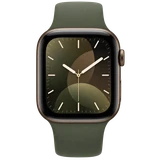
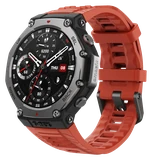
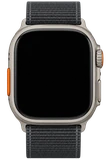

Apple is facing a proposed class action over the five Apple Watch models it left out of watchOS 27.
Richard Goetz filed the complaint on 12 August in the US District Court for the Northern District of California, as reported by Gadgets and Wearables. It names Series 6, Series 7, Series 8, the second-generation SE and the original Apple Watch Ultra, all of which stop at watchOS 26. Apple lists Series 9, Series 10, Series 11, SE 3, Ultra 2 and Ultra 3 as compatible with the new release.
The complaint's phrase for this is software tethering. The argument is that the hardware keeps working while Apple alone decides how long it stays current, and that a buyer has no way to price that in at the till. Goetz says he bought an original Ultra in December 2022 for around $799 and would have paid less had he known it would miss a major update in under four years.
Nobody's watch is turning off. A Series 8 on watchOS 26 will do tomorrow what it did yesterday, and it will keep doing it for a long time. What ends is new features, and eventually the assumption that every new iPhone will pair with it cleanly.
The second-generation SE is the awkward one. Apple was still selling it as part of the current lineup until the SE 3 replaced it in September 2025, which means a watch bought new from Apple last year is now outside the update list. The Ultra will get more attention because it cost $799, but the SE is the model where the gap between what Apple was selling and what Apple supports is smallest and hardest to explain.
This is very early. Apple has not filed a response, no class has been certified, and the proposed class covers California residents only. Most consumer suits of this shape settle or narrow long before anyone reads a verdict, and the number a plaintiff paid for one watch is not the number a court would use.
The practical question is what an owner does now. Nothing, mostly. watchOS 26 is a finished release, the health sensors do not stop measuring, and the features that arrived in watchOS 27 are additive rather than structural. We wrote about what the update actually brings: a proper Siri app on the wrist and a single unified Find My. Useful, not essential.
What the case does usefully is put a number on an expectation Apple has never printed. Google and Samsung both publish an update commitment in years for their phones. Apple publishes none for the Watch, and buyers have been left to infer it from history. A complaint asking a court to name the number is a strange way to get one, but it is the first time anyone has asked in public.
If you are shopping now, the arithmetic is simple. An Ultra 2 or a Series 11 starts the clock today. A discounted Series 8 has already spent most of it.