
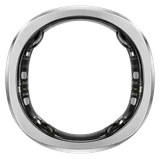
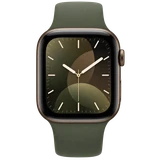
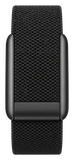

Whoop asked American regulators to approve a device called WM50 on May 15, and it still has no name.
The paperwork is thin on purpose. The FCC, the US agency that certifies anything with a radio inside it, lists WM50 as a "Sensor Device" running Bluetooth between 2.402 and 2.480 GHz. Singapore's IMDA registered the same hardware on June 10. Neither document calls it a Whoop 6.0, a cheaper Whoop or a second MG. For now it is an unreleased Whoop, and that is the whole of what the filings say it is.
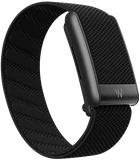
Gadgets & Wearables went back through the FCC documents this week and found the line worth reading twice. Whoop states that WM50 is "derived directly from the WS50 hardware platform", with no additional components added to the board. WS50 is the regulatory model number for the Whoop MG, the company's flagship sensor. The standard Whoop 5.0 files under WG50 instead. So WM50 is not new silicon. It is the MG, reused.
With one piece taken out.
Whoop names the removal itself: the "NFC Tag Reader transmitter subsystem and its associated supporting circuitry" is gone. NFC is the very short range radio that lets a phone pay at a till or a hotel key open a door, and it only works over a couple of centimetres. The Whoop MG carries one at 13.56 MHz. So does the WB50 PowerPack, the battery slab that slides onto the strap to charge the sensor without taking it off your wrist.
Two devices that touch each other, both carrying the same short range radio, is a strong hint that the radio is how they recognise each other and swap information such as charge level. Whoop has never published what the NFC hardware is for, so that reading is inference rather than a confirmed feature, and Gadgets & Wearables says as much in its own write-up.
What the filing does not contain is a reason. Nothing in the documents explains why a component involved in talking to the battery pack came out of a platform that was otherwise copied across unchanged. A cheaper sensor would explain it. So would a different charging arrangement, or a device that is not meant to be worn on a wrist at all. The FCC does not ask companies to say which.
One thing the paperwork does push away is the muscle oxygen sensor Whoop has said it is developing. That is a different shape of product, built for different parts of the body and around a different kind of optical measurement, and it would not be an MG board with a radio deleted.
The rest of the answer already has a date on it. Whoop asked the FCC to keep the internal and external photographs of WM50 confidential, and that period lifts on November 11.