
















Love it
Not so much
- Light and comfortable at 68 grams
- Pinned mode holds the screen still
- Sharp, readable text
- Speakers tuned with Bang & Olufsen
- No tint or dimming
- Pinned mode is much dimmer
- Doesn't work with the iPhone 16e, 17e or Air
- Fixed 64mm eye spacing
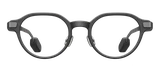
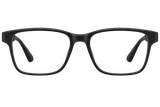
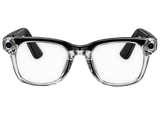
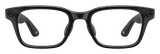
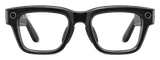
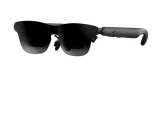
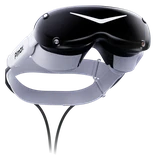
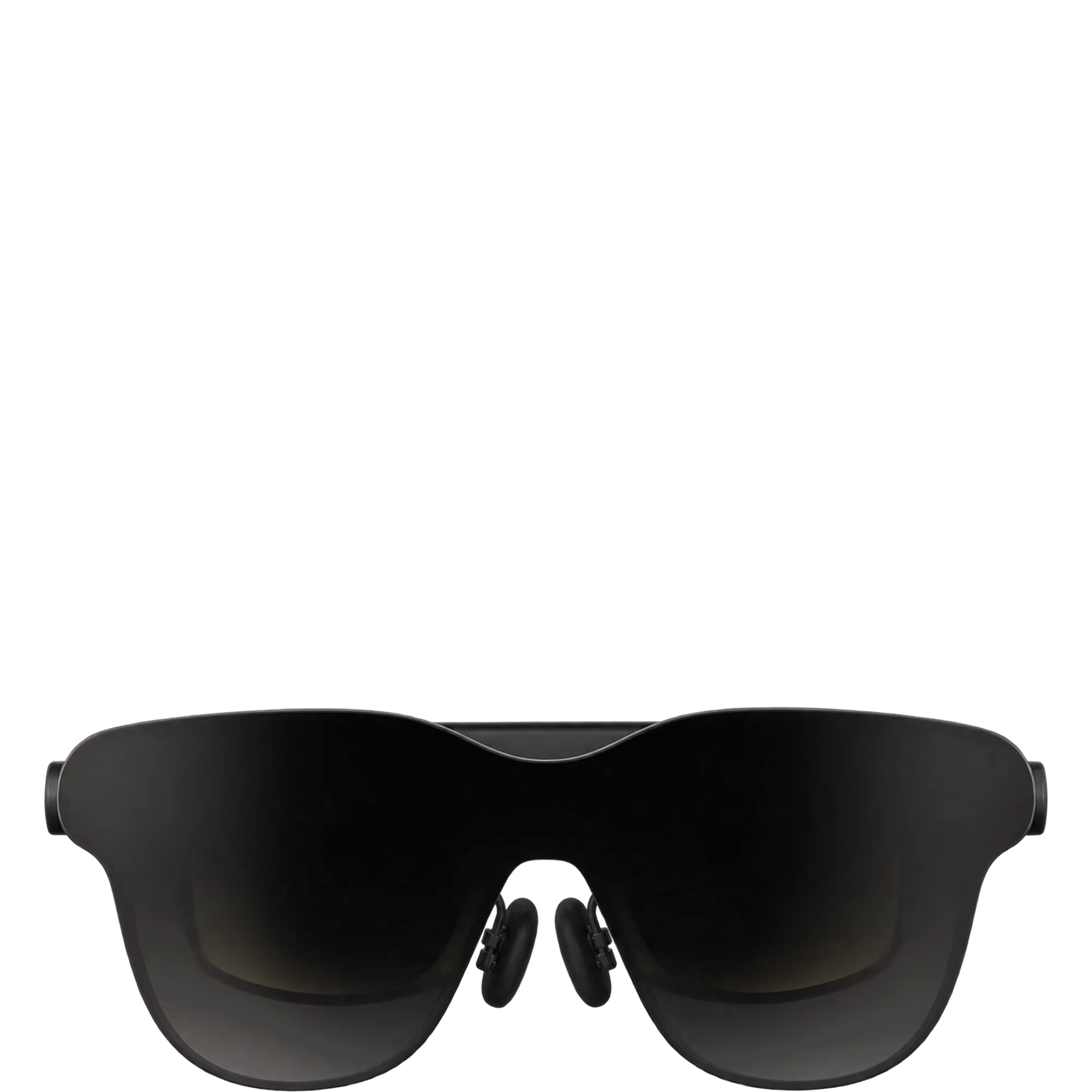
The RayNeo GT is light on your face. At 68 grams, with adjustable nose pads, it stays comfortable through a long movie.
What sets it apart from the cheaper RayNeo Air 4 Pro is head tracking built into the frame. It can pin the screen in place, so the picture stays put when you turn your head.
Picture
The Micro-OLED screens run at 120Hz across a 46-degree field of view, and text is sharp enough to read documents, not just watch films. For travel, RayNeo pairs it with Steady mode, so a bumpy ride doesn't drag the picture around. RayNeo rates the picture far dimmer only in Pinned mode, so pinning works best in a dim room or with the window shade down.
The lenses have no tint and no dimming. In a dim room or on a night flight that doesn't matter. By a sunny window or under bright office lights, the picture washes out.
Sound
Four open-ear speakers tuned with Bang & Olufsen sound great for glasses, and there's a Whisper Mode for quiet places.
Fit
The eye spacing is fixed at 64mm, so if your eyes sit far from that, buy where you can return it. If you wear glasses, RayNeo's partner Lensology makes custom prescription lenses. There's no camera on the frames, and no lens cover comes with them.
What it plugs into
The GT has no battery. It runs off whatever you plug it into over USB-C, which has to send video out (DisplayPort over USB-C). That device does the work, so expect it to get a little warm and lose battery faster.
On iPhone it works with models that send video over USB-C, which leaves out the iPhone 16e, 17e and Air. If that's your phone, you can still plug the glasses into a laptop or a Steam Deck. On Android, the phone has to support DisplayPort over USB-C, so check yours first. Macs and Windows laptops connect by USB-C video or through RayNeo's powered HDMI adapter, sold separately. A Steam Deck or another handheld that sends video over USB-C plugs straight in. A Switch or Switch OLED connects through its dock's HDMI with that adapter, and the Switch Lite can't connect at all. Turning flat video into 3D needs the RayNeo XR app.
How it compares
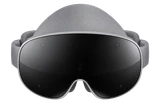
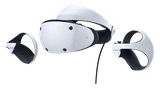
The RayNeo GT Max has a wider 59-degree view, but it's heavier and costs more, so for most people the GT is the better buy. The INAIR 2 Pro costs more too, and it's the pair to get if you want several virtual work screens from a laptop. The RayNeo Air 4 Pro is cheaper and can't pin its screen in place, which is fine on a couch.
What's in the box
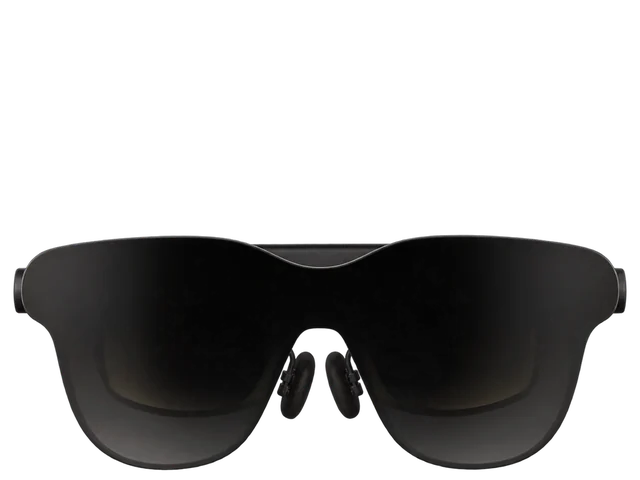 RayNeo GT glasses
 USB-C cable
Bottom line
The RayNeo GT is a light, sharp private screen for movies and handheld games, and it's our pick over the RayNeo GT Max, which is heavier and costs more, and over the INAIR 2 Pro, unless you want a second monitor. If you only watch at home, the RayNeo Air 4 Pro does the job for less.
Buy it if
Skip it if
- You want a big private screen that can stay put when you turn your head, and you watch in dim light.
- You want great built-in sound without earbuds.
- You'll watch in bright rooms or outdoors.
- You only watch at home. Get the RayNeo Air 4 Pro.