
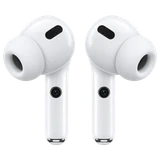
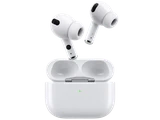
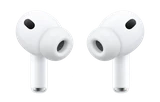
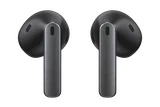
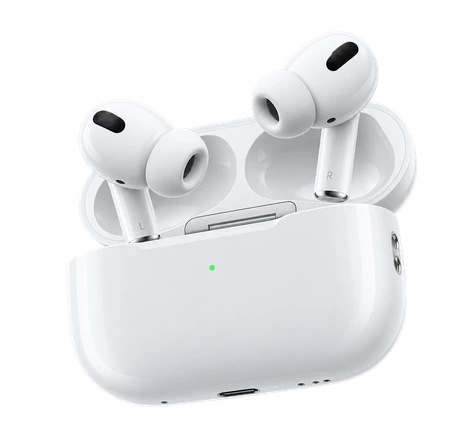
A MacRumors forum member going by mactracker pulled a hidden framework called AccessorySensorManager out of the macOS Tahoe 26.7 release candidate. It handles sensor data from AirPods while they are connected to a Mac, and it is the most specific account of Apple's camera earbuds that exists outside Apple.
The cameras are color. Left and right buds each carry their own sensor, and the framework returns synchronized RGB stills with matching frame IDs, so Visual Intelligence gets one scene from two angles. Infrared appears nowhere in the code. That does not rule the sensors out, and it does mean nothing in here needs them.
They take stills and never video. In active mode, likely triggered by asking Siri, a bud captures a 640x640 image and returns a processed 1024x1024 one. "That's about 0.4 megapixels of sampled image data, and a little over 1 megapixel for the output frame," mactracker wrote. Passive mode drops to 320x320 going in, and either 320x320 or 512x512 coming out. "These are capture-specific resolutions, and the physical sensor's native resolution may be larger," they added.
Nothing Apple has said publicly covers passive mode. The framework lists conditions that can rouse it: speech nearby, a change in the surrounding audio, a posture change, head rotation, movement outside a defined area. The code does not say whether each of those actually triggers a capture. It describes earbuds that look around without being asked to.
The unglamorous engineering is in there too. Lens distortion correction, calibration between the two cameras, calibration between the cameras and the motion sensors, and a way to discard a frame spoiled by movement or a blocked view. A reference to "peripheral inference" puts detection of whether a person is in view on the bud itself. The framework can also drive a hardware indicator and set its brightness, which is a light that tells the people around you when the cameras are running.
The AirPods in the demo video Apple left in the same build were a version of the AirPods Pro 3 with cameras, codenamed B790. Mark Gurman has since reported that Apple no longer plans to release that model and has moved to a new generation, codenamed B798. The framework almost certainly belongs to the pair that was canceled.
That does not make the code worthless. Apple wrote it to run on shipping macOS, against hardware it had built and tested, and the demo video beside it was finished enough to ship by accident. What it cannot tell you is which of these numbers survives into B798, or whether the second pair keeps color sensors, or a light, or the passive mode at all. Gurman has the camera AirPods off Apple's 2026 schedule and in 2027, possibly alongside the 20th-anniversary iPhone. The most detailed spec sheet anyone has for them was written for the version Apple decided not to make.