
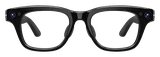
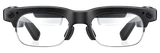
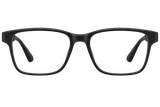
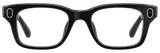
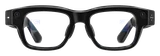
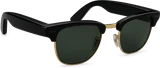
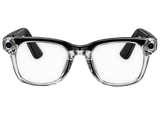
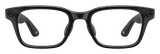
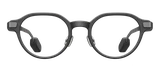
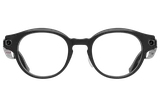
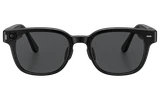
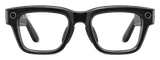
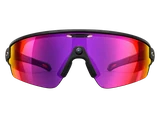
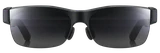

Viture has a new line of smart glasses called Vonder, and it has no camera. Digital Trends reported the launch on Monday. The glasses start at $299 and go on sale September 28 in the US, from VONDER.ai and Best Buy. Shipping starts in November.
Without a camera, there's no lens pointed at the person across the table. That complaint has followed camera glasses since Google Glass, and Viture built its pitch around avoiding it.
You talk, and the glasses turn what you say into text. Viture calls the result a Personal Memory Graph. According to Digital Trends, the company says audio is recorded and processed but not saved. What's kept is the words.
Viture says that text powers insights, voice notes, reminders, hands-free music and calls. The glasses connect to ChatGPT, Claude and Gemini. A fourth option, a hybrid mode Viture calls VONDER AI, combines several models so you don't need a subscription to each.
Viture pitches Vonder for conversations, lectures and meetings, and says those are only recorded when you tell the glasses to start. Nobody outside the company has tested that, and Digital Trends didn't say it had worn a pair.
The glasses come in six frame styles, with gradient prescription lenses as an option. Viture is betting they have to pass as ordinary eyewear before anyone wears them all day.
Viture is better known for display glasses you plug into a phone or a console. Vonder drops the display altogether. So this isn't a new version of what Viture already sells. It's a different kind of product.
Most AI glasses sold so far have no screen, and Meta's Ray-Bans lead that group with a camera built in. Meta has reportedly considered a version without one. Viture is putting one on sale first.
Before November, check whether "processed but not saved" holds up once reviewers can see what the app stores. And ask how much of the AI works without a paid plan. Viture hasn't said, and at $299 that decides what you're really paying.