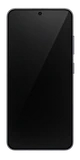
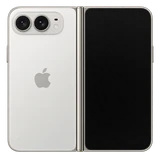
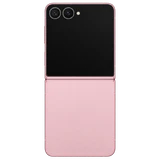


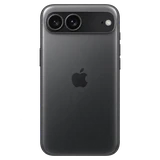
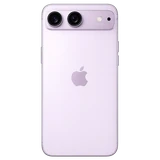





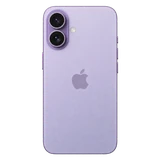
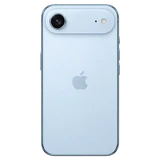














































Apple's answer to the foldable crease is two pieces of glass instead of one. The Elec reports that the book-style iPhone Ultra sandwiches its inner display between two layers of ultra-thin glass, holding the panel out of direct contact with the hinge.
Ultra-thin glass is what it sounds like, a sheet of real glass milled down until it will bend, and it is what lets a foldable feel like a phone rather than a plastic screen protector. It is also the layer that carries the crease. Every foldable on sale has one somewhere in the stack, so the news is not the material, it is the count and the placement.
The point of that arrangement is where the stress goes. A single sheet takes the whole bend at the fold line and eventually remembers it. Two layers spread the load across the stack, and a panel that never touches the hinge is not being pressed into a shape by it. That is the theory and it is all that has been published. MacRumors is where the report reached us and no second outlet has it.
Our roadmap has flagged the hinge and the crease as this product's development risk since long before anybody knew how it was built. Instant Digital reported hinge reliability problems. Jon Prosser and others reported Apple targeting a nearly invisible crease. What none of them had was the method, and the method is the part a competitor can order.
They already have. Samsung will mass-produce the two-layer glass for Google, Oppo and Vivo, per The Elec, for wide adoption in 2027. Apple has not shown the phone.
Samsung's own answer to the crease on the Galaxy Z Fold 8 was a titanium substrate under the display, a different fix for the same problem, and one our leak index graded correct. It will now be manufacturing Apple's fix for Apple's other competitors.
Two years of reporting on this phone have been about size, price and when. The displays are around 5.4 inches outside and 7.6 inches inside, the body is reported at about 4.7mm unfolded, and the price has been read at $2,000 or higher since Ming-Chi Kuo first put a figure on it. None of those numbers answer the only question a person asks about a folding screen, which is what it looks like after a year.
What none of this tells a buyer is whether it works.
A construction is not a result. The iPhone Ultra is expected to start at $2,000 and possibly above $2,500, its launch timing has been disputed between September and later in the year, and Apple is expected to unveil it next week. The crease is the one thing on that product a person can see from across a table, and the first look at whether two sheets of glass fixed it will come from somebody holding the phone.