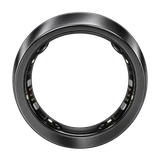
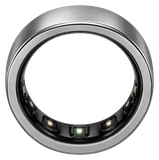
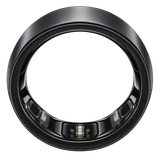
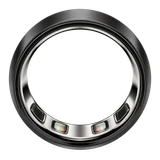


Zepp Health sued Oura in April over six patents and dropped the entire case in July, before any judge decided whether Oura had infringed a single one of them. A US International Trade Commission notice published on August 12 explains the retreat. The two companies had settled.
Gadgets & Wearables found that notice and laid out the sequence. On July 9, Oura and Zepp jointly asked the ITC to terminate Zepp from Oura's own investigation, and the filing states that the request rests on a settlement agreement. An administrative law judge approved it on July 10. Zepp dismissed its six-patent lawsuit in the Eastern District of Texas the same day.
That lawsuit, filed on April 21, accused the Oura Ring Gen 3, the Gen 4 and the Oura app of infringing patents covering motion recognition, sensor confidence, stride calibration, health scoring and sleep monitoring. It was dismissed without prejudice, so Zepp keeps the right to bring the same six claims again whenever it wants to.
What actually changes
The consequence with teeth is an import one. Oura sued Zepp last November over the Amazfit Helio Ring, then filed an ITC action seeking import restrictions against Zepp and several other smart ring companies. The Commission confirmed Zepp's removal from that case on August 11 and published the notice the next day. Amazfit rings are no longer among the products facing a potential exclusion order in it.
An exclusion order is not a fine. It stops a product at the US border, and in a category this small, losing one maker thins the shelf in a way a buyer would notice within a season.
The terms are sealed, so what either company gave up is unknown. The shape is not. Oura has spent years enforcing its ring patents against RingConn, Ultrahuman, Samsung and Zepp, and this fight ended with no finding that anybody infringed anything. Two companies argued for nine months about stride calibration and sleep scoring, then agreed to stop and told nobody why.
The patents are still untested
A settlement leaves the underlying question exactly where it started. No court said Oura's motion and sleep patents are strong, and no court said Zepp's are. The Oura Ring Gen 4 and the Amazfit Helio Ring both remain on sale with the same disputed technology inside them, and the only thing that has changed is that the two firms stopped paying lawyers to argue about it.
That pattern is worth holding onto when the next smart ring suit is filed and covered as a verdict in waiting. Most of these end in a private deal, and a private deal tells a buyer nothing about which ring measures sleep better.
Reading any of this as peace would be wrong. Samsung is still in substantial smart ring litigation with Oura, Oura's patent portfolio is still being challenged in several venues, and Zepp can refile the claims it just withdrew.