







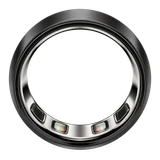
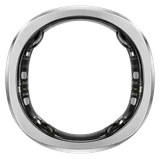
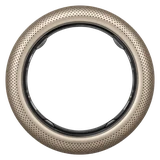

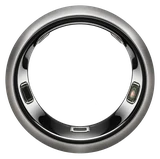
Oura has published a patent application for a different way of arranging the optical sensors inside a ring, and it names blood pressure in the claims. The filing is called "Axial photodetector array for wearable ring devices". It went in as an international PCT application from the US, and the World Intellectual Property Organization published it on August 13. Ivan Jovin read the filing for Gadgets and Wearables. The document itself is public, which is the part that matters here: this is not a claim about a filing, it is a filing.
Oura Ring 5 already watches for this. It reads your overnight biometrics and tells you when the pattern is drifting toward rising blood pressure, and it rolls out in the US first. What it hands you is a pattern. It does not give you a number and it has never claimed to.
The proposal is to stop putting photodetectors only around the inner circumference of the ring and run them across its width as well. Two detectors sitting a known distance apart pick up slightly different versions of the same pulse wave, differing in timing and in signal characteristics. Comparing those is where the extra information comes from. The drawings show rows of detectors positioned between the LEDs, four of them in some versions and six in others.
Blood pressure is not the only thing Oura names. Pulse wave velocity, arterial stiffness and blood viscosity are in there too, and all four sit in the claims rather than in the surrounding text. Jovin draws that distinction and it is the right one. Patents carry long lists of things a device might theoretically measure, and a mention buried in the description costs the applicant nothing. The claims are what a company is asking to own.
This is not Oura's first attempt at cuffless blood pressure either. The earlier filing worked on pulse timing, synchronization and calibration, which is software: take the signal you already have and process it harder. This one changes the hardware that produces the signal. The two fit together rather than compete, and Oura says the same array could simply average its readings to make ordinary PPG tracking more accurate, whether or not blood pressure ever reaches anybody's finger.
There is more in the document than the array. Oura describes inner and outer electrodes that would close an electrical path through you when you touch the outside of the ring with a finger from the other hand. That arrangement could carry ECG, bioimpedance and electrodermal activity, which Oura ties to muscle mass, body fat and hydration on one side and galvanic skin response and stress on the other. A reference to NFC for payments, authentication and unlocking things sits well away from the invention, and Jovin is right to park it rather than read it as a coming NFC ring.
None of this is a product. A patent protects an idea and Oura has announced nothing, so the honest reading is about where the company is putting its engineering attention rather than about what you will be able to buy. This time it is not the software layer. Ring 5 flags a pattern. The claims in this filing name the number.