




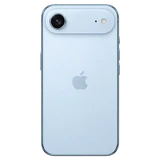



















If you plan to game or edit video on an iPhone for long stretches, the Pro Max is the one to buy this year. Tom's Guide ran its benchmark suite on both new Pro phones, and the bigger one kept its speed under load far better than the smaller one did.
Both phones use the A20 Pro, Apple's first iPhone chip built on a 2nm process. Apple says its two performance cores are 20% faster, its seven-core GPU delivers 40% better graphics, and a second neural engine doubles its AI processing. Tom's Guide tested those claims while reviewing the phones.
Raw CPU speed is the easy win. In Geekbench 6, the iPhone 18 Pro scored 4,735 single-core and 12,800 multi-core. The iPhone 17 Pro scored 3,834 and 9,988 in the same test. The Galaxy S26 Ultra, Samsung's current flagship, landed at 3,785 and 11,563. The 18 Pro Max scored almost exactly what the 18 Pro did, so the larger phone buys you no extra CPU speed in a short test.
Apple chips have usually trailed Snapdragon on graphics, and last year the iPhone 17 Pro and the S26 Ultra were close. In 3DMark's Solar Bay Unlimited test, the iPhone 18 Pro averaged 61.93 frames per second and the 18 Pro Max 67.9. The S26 Ultra averaged 49.37 and the iPhone 17 Pro 46.4. That is a clear lead for Apple on a test built to push a phone GPU hard.
AI is the one area where Apple did not take the top spot. Geekbench AI gave the iPhone 18 Pro 69,245 and the Pro Max 71,974, up from 49,050 on the iPhone 17 Pro. The second neural engine helped a lot, but it did not double the score, and the S26 Ultra still beat both new iPhones at 83,047. The two phones ran through different AI frameworks in that test, Core ML on the iPhones and TensorFlow Lite on the Samsung, so the gap is a rough comparison rather than an exact one.
Short benchmarks show a chip at its best for a minute or two. A long gaming session shows what happens once the phone gets hot and starts slowing itself down. Apple redesigned the vapor chamber this year, the cooling plate that pulls heat away from the chip, with three times the surface area of last year's, and said it would lift sustained performance by around 40%.
Tom's Guide's results split the two phones. In 3DMark's Wild Life Extreme stress test, the iPhone 18 Pro Max kept 79.4% of its peak performance, up from 65.2% on the iPhone 17 Pro Max. The iPhone 18 Pro kept 62.8%, barely better than the 61.1% its predecessor managed. Both beat the S26 Ultra, which held 53.9%.
So the smaller phone gets the new chip's peak speed but almost none of the cooling gain. A bigger body leaves more room to spread heat, and the stress test shows that room paying off. If your phone mostly runs messages, maps and photos, you will not feel the difference. If you play demanding games or export long video, the Pro Max is the model that holds its pace.
They are the first full set of numbers published. The Android side answers soon. Qualcomm's Snapdragon Summit runs September 22 to 24, where the chip for next year's Galaxy phones is expected, and the S26 Ultra figures above are the bar it has to clear.