
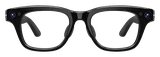
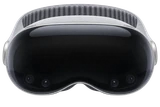
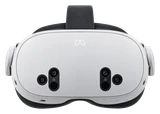
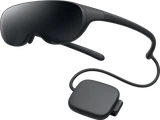
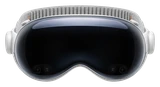



A new Google patent application describes AR glasses that figure out what you want to know just by watching where you point and look. Patent tracker Patentlyze spotted the filing, submitted April 9 and published October 15, and Android Headlines reported on it. The core example is mundane enough to be useful: point at a port on the back of a router, and the glasses show what it does without you squinting at tiny labels or searching your phone.
The system reads three things at once: the specific part you are pointing at, the object it belongs to, and how nearby objects relate to each other. Two AI models split the work from there. One turns the gesture into a written prompt. The second answers that prompt and pins the result to the real object as a label or line, tracking it even if you pick the object up and move it. The glasses also weigh how long you hold a gesture, how close your fingertip gets, and where your eyes settle to narrow down what you mean.
The filing covers more than pointing. It describes reading printed label text directly and answering spoken questions tied to whatever you have selected, like how two parts fit together. There is a safety case built in too: set a coffee cup next to a hard drive, and the glasses could flag the spill risk before it happens.
Google also addressed privacy inside the filing itself, describing on-device blurring of faces, photos, and printed documents before anything reaches a cloud model.
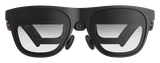
A patent is not a product. Google files them constantly, and most never ship. But the idea lines up with where Android XR is already headed, with Gemini doing the reasoning. Android Headlines writer Alexander Maxham tested a prototype pair of Android XR glasses at Google I/O 2026 and called the on-device AI the most impressive part of the hardware, well ahead of simply talking to Gemini out loud. Paired with upcoming hardware like XREAL's AURA, pointing-based AR stops looking like a novelty and starts looking like the interface Google wants smart glasses to have.