
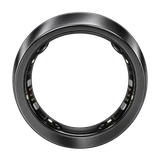
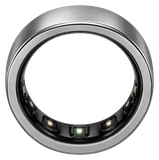
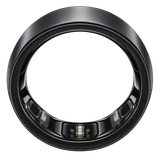
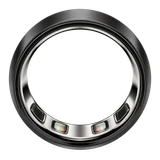
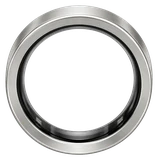
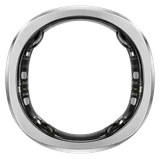
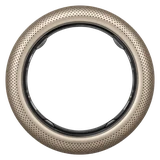
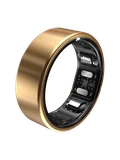
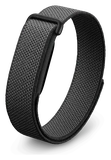
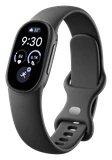
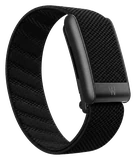

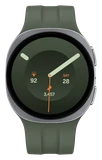
The Luna Band costs $149 and asks for nothing after that. Android Police reported this week that the tracker, announced at CES in January, has gone on sale worldwide through Noise's own online store, at $149 in the United States and £129 in the United Kingdom. There is no membership fee and no paywalled tier of the app.
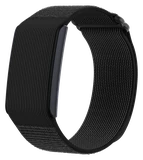
The band weighs 24 grams. The frame is 27mm across, worn on a nylon strap in black, Aloe Green or Desert Beige. Underneath the body a single sensor package reads heart rate, skin temperature and blood oxygen, and an accelerometer and gyroscope handle movement. There are more than 60 workout modes, five of which start on their own when you do, plus training load and a VO2 Max estimate, which is a score for how efficiently your body uses oxygen when you exercise. The 5 ATM rating means you can swim in it.
Screenless means what it says. There is no display on the band to check, so everything it records reaches you through the phone app.
Two people wearing a Luna Band are wearing two different products, each one shaped by their own body and their own goals
Sitting on top of the hardware is a software layer Noise calls LifeOS, built out of small plug-in tools it calls micro-apps. They cover circadian sleep patterns, meaning when your body expects to be asleep rather than how many hours you got, along with hydration, a fitness age number, supplement suggestions and guidance on when caffeine is a bad idea. Insights driven by artificial intelligence are promised rather than shown. The band is meant to keep reading your data and adjusting its strain and recovery advice as it goes.
Luna's founder, Amit Khatri, put the idea this way: "Two people wearing a Luna Band are wearing two different products, each one shaped by their own body and their own goals."
None of that has been tested by anyone outside the company.
The price is the part a buyer can check today. Garmin's screenless Cirqa is $200 and also charges nothing on top of the hardware. Fitbit keeps its deeper analysis behind Fitbit Premium and Whoop behind a membership, and the Luna Band arrives at $149 with neither of those attached to it.
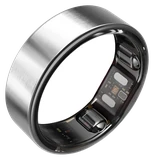
Noise already sells a wearable in roughly this shape. The Luna Ring has been out since 2025, and the band moves a similar sensor set from a finger to a wrist. Worldwide availability was announced at IFA in Berlin, eight months after the tracker first appeared at CES.