

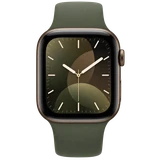
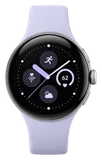
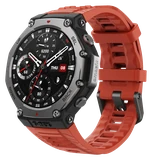
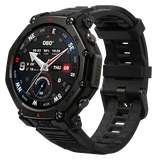
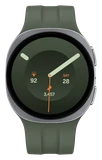
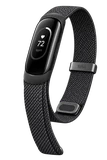
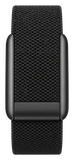
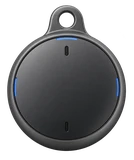
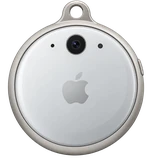
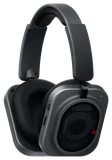



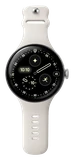
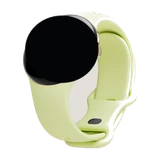
A Reddit post on Friday named a Google wearable, gave it 12 days of battery, and cited nobody. The device was a Pixel Watch AURA, roughly a Fitbit Charge wearing the Pixel name, out later this year. Gadgets and Wearables ran the image attached to that post through three separate AI image detection tools. All three came back between 97 and 99 percent likely to be generated.
Detectors are not proof. Compression, ordinary photo editing and unusual product renders all fool them, and one high score on its own would mean very little. Three of them, on an image nobody can trace to a source, is harder to wave off.
Marko Maslakovic then pulled apart the Google Pixel Watch app, version 5.0.0.958206140, and the Google Health app, version 5.06.1, which replaced the Fitbit app earlier this year. Neither one contains a Pixel Watch AURA. Google Health does contain a standalone AURA entry. Follow it through the app and it sits beside blurred vision, sensitivity to light, numbness and vertigo. It is migraine aura.
None of that proves the device does not exist.
Google can keep an unreleased product out of a public app build, use a different internal codename, or push the configuration down from its servers on launch day. Digging through an APK, the installer file behind an Android app, is far better at finding something than at proving an absence. It does mean the two places a real Pixel wearable would leave a trace have nothing in them.
The thing underneath the fake is real. An unidentified wearable with a small colour display, shaped somewhere between a Fitbit Charge and a Pixel Watch, turned up in a couple of Google's own Pixel 11 ads earlier this month, and more than one person saw it. A Fitbit Charge 7 is the obvious guess given how long it has been since the Charge 6. A new category alongside the screenless Fitbit Air is just as available. Nobody has established which.
The 12-day battery figure has no source either. The screenless Fitbit Air is officially rated at up to a week.