
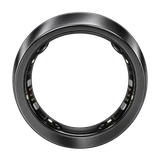
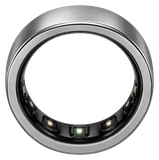
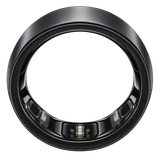
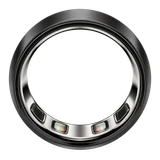
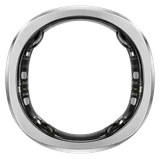
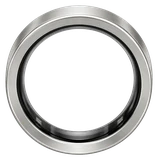
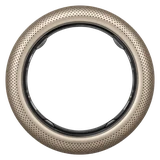
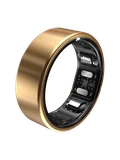



Smart rings are disposable because the battery is sealed inside them. Ultrahuman has filed a design that is not. Gadgets and Wearables found the application, US 2026/0246054 A1, lodged in February 2025 and published on August 20.
The filing splits the ring in two. The main body carries the sensors and the electronics. A curved battery section clips onto it, and the document names several ways of holding the two halves together, from magnets to a snap fit. Electrical contacts join the module to the rest of the ring automatically once it is on, using either sprung metal pins that press together to make a connection or magnets that do the same job.
A second, much smaller battery sits inside the main body and runs the sensors while the module is off.
That is what separates this from the Oura filing Gadgets and Wearables reported earlier this year, which also lifts the battery housing away from the sensor half. Oura's version makes the battery replaceable. Ultrahuman's is built so the ring does not miss anything while you replace it, with a switching mechanism handing power back to the large battery once a charged module is attached. Keep a spare charged and the swap takes seconds instead of the hour or two a ring normally spends on its charger, which matters most overnight, where a gap in the data moves the next morning's sleep and recovery scores.
Marko Maslakovic, who wrote the piece and has tested the Ultrahuman Ring Air, puts that ring's drain at 15 to 20 percent a day and calls the performance solid. Lithium cells degrade with repeated charging whatever they do when new, and a ring whose battery has faded is a ring you throw away. The filing goes at that directly: replace the module, keep the ring. It also floats modules in more than one capacity, so a buyer could pick a lighter one or one that runs longer, and some of the drawings add an outer shell in silicone or metal that fits over both halves and hides the seam.
None of this is a product. A patent application describes something a company thought was worth protecting, not something it has decided to build, and a removable section that stays waterproof and comfortable on a finger worn around the clock is its own engineering problem. Two of the biggest names in smart rings have now filed on the same idea inside a year.