


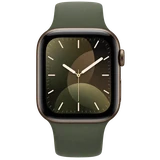


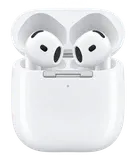

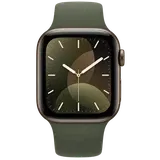

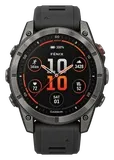

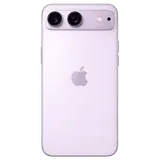


Beth Skwarecki used to rank the Apple Watch's heart rate sensor a C. After a week of workouts with a Series 12 on one wrist, a Garmin Forerunner 570 on the other and a chest strap as the reference, she moved it up to her A tier, level with the Garmin. That's the sensor she had found better than anything else she'd tested, and Garmin's Forerunner 970 and newest Fenix and Venu watches use it too.
Skwarecki, Lifehacker's senior health editor, went in to check Apple's line that the Series 12 and Ultra 4 have the "most accurate heart rate in a wearable." Apple rebuilt the sensor with larger LEDs set closer together in a circle, and it published a study comparing the watch with seven rival devices. Her problem with that study is that each device got roughly one number per workout type, so you can't see how a watch behaves in the middle of a session. Her graphs show exactly that.
On treadmill and trail runs, both watches stayed on track most of the time. The Garmin sometimes lagged at the start of an interval. The Apple Watch didn't, but it was more likely to drop readings altogether, especially early in a workout. On a rowing machine the Garmin missed almost half of the second interval, while the Apple Watch overestimated in places. Strength work, holding a barbell and dumbbells, was a mess for both.
She won't give it Apple's "most accurate" title, because the watch seems to hold back a reading it isn't sure of. That leaves fewer wrong points on the chart and some odd blank stretches. Still, she's done arguing the old point: "I will no longer have to tell people Apple's sensor is mid."
Rob ter Horst put the Series 12 against a Polar H10 and got a 0.97 correlation lifting weights, but rated it broadly similar to the Series 11, where Skwarecki saw a big jump over the Series 10 and 11. Her full graphs are in her write-up.