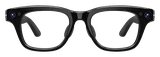
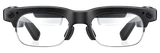
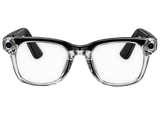
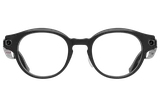
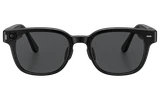
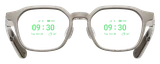
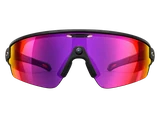
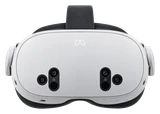
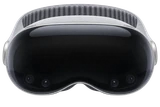
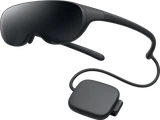
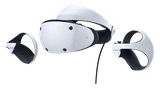
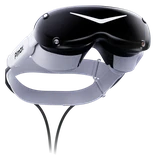


Xreal Project Aura runs Google's Android XR, and the computing is split across two chips in two places.
The X1S sits in the glasses. Xreal puts it 25% faster than the original X1 and tuned for multitasking.
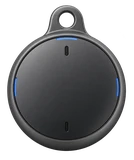
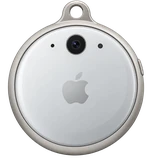
The puck on the wire holds a battery, a Snapdragon chipset and everything else the Android XR experience needs.
Gemini comes with the platform rather than as an addition.
At Google I/O 2026 the demos ran immersive Google Maps and YouTube 180 and 360-degree video through Aura's OLED displays and a 70-degree field of view. One demo connected the glasses to a laptop over DisplayPort and extended the multimodal AI onto that laptop in three-dimensional AR space.
Autospatialization is Xreal's own name for the part that turns flatscreen games, images and video 3D on the fly.
The optics dim electrochromically and take prescription inserts.
Google supplied the platform and the assistant. Xreal supplied the silicon that drives the lenses.